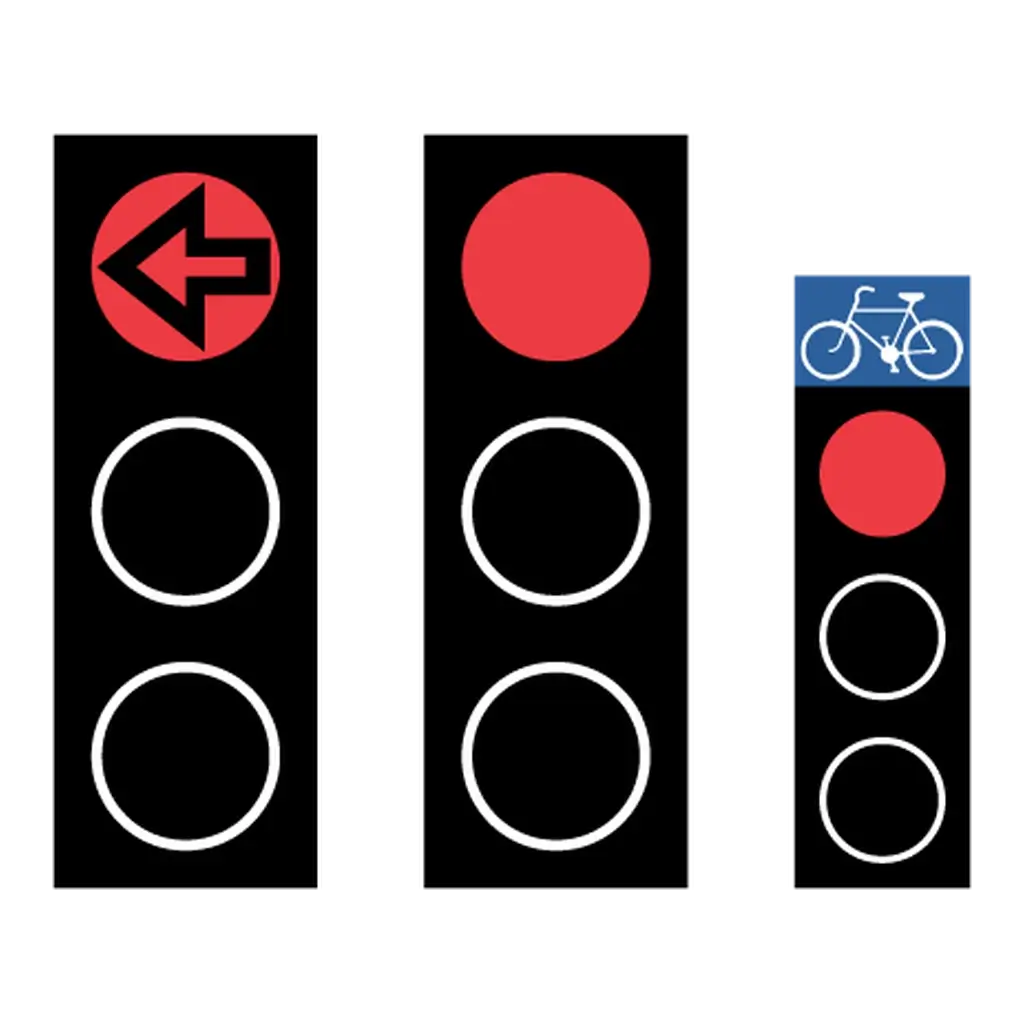
Red signal
SIG1 · Rött ljus
A steady red light means stop. You must stop before the stop line, or before the signal if there is no line, and wait until the signal turns green.
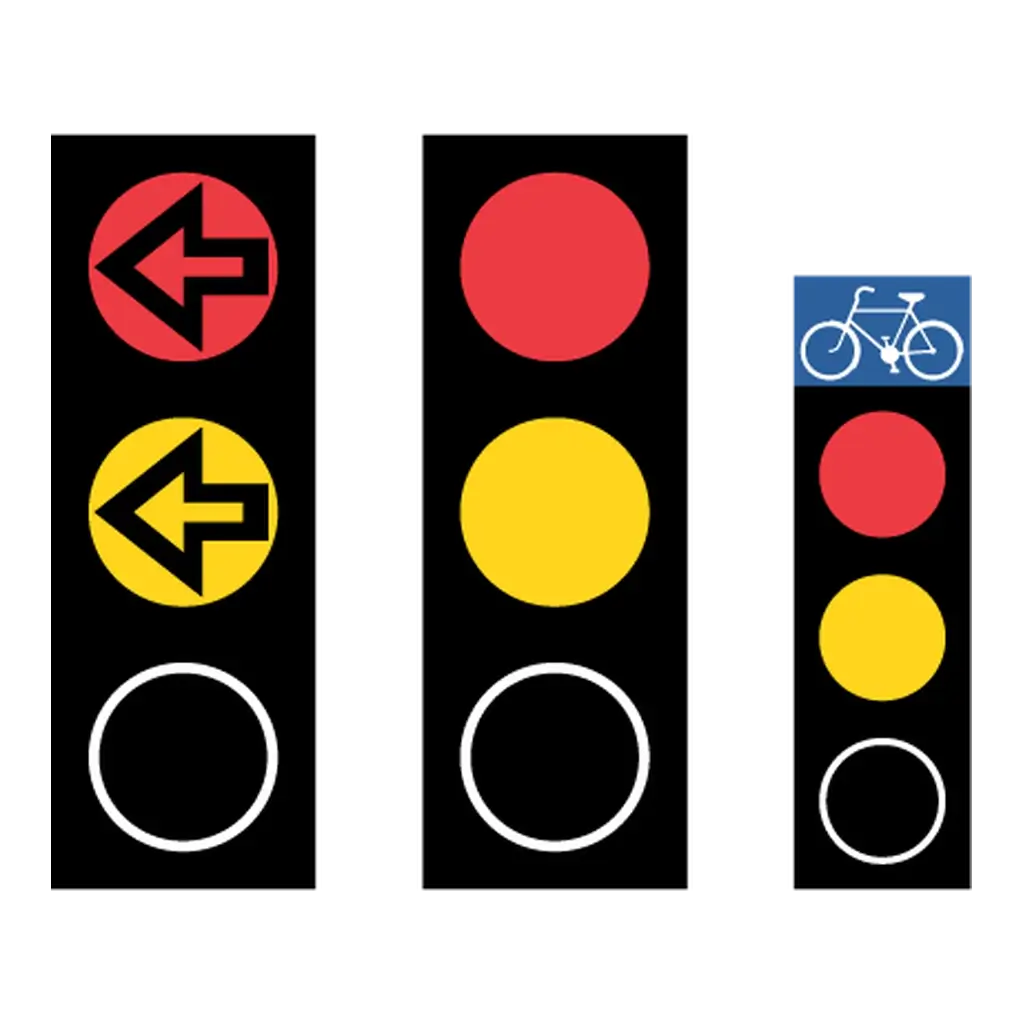
Red and amber
SIG2 · Rött och gult tillsammans
Red and amber shown together warn that the signal is about to change to green. You must still wait — do not move off until the green light appears.
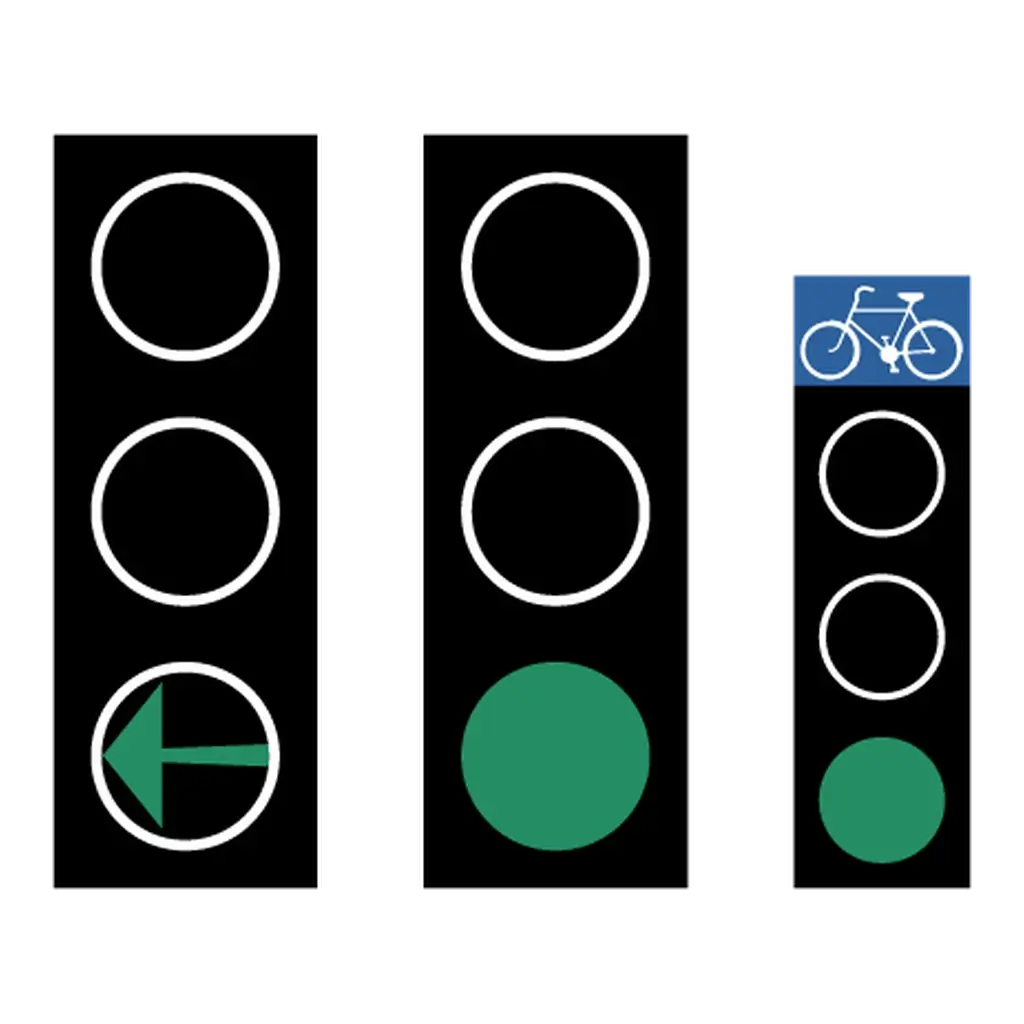
Green signal
SIG3 · Grönt ljus
A steady green light means you may proceed if the way is clear. You must still give way to pedestrians on the crossing and to other road users who already have priority.
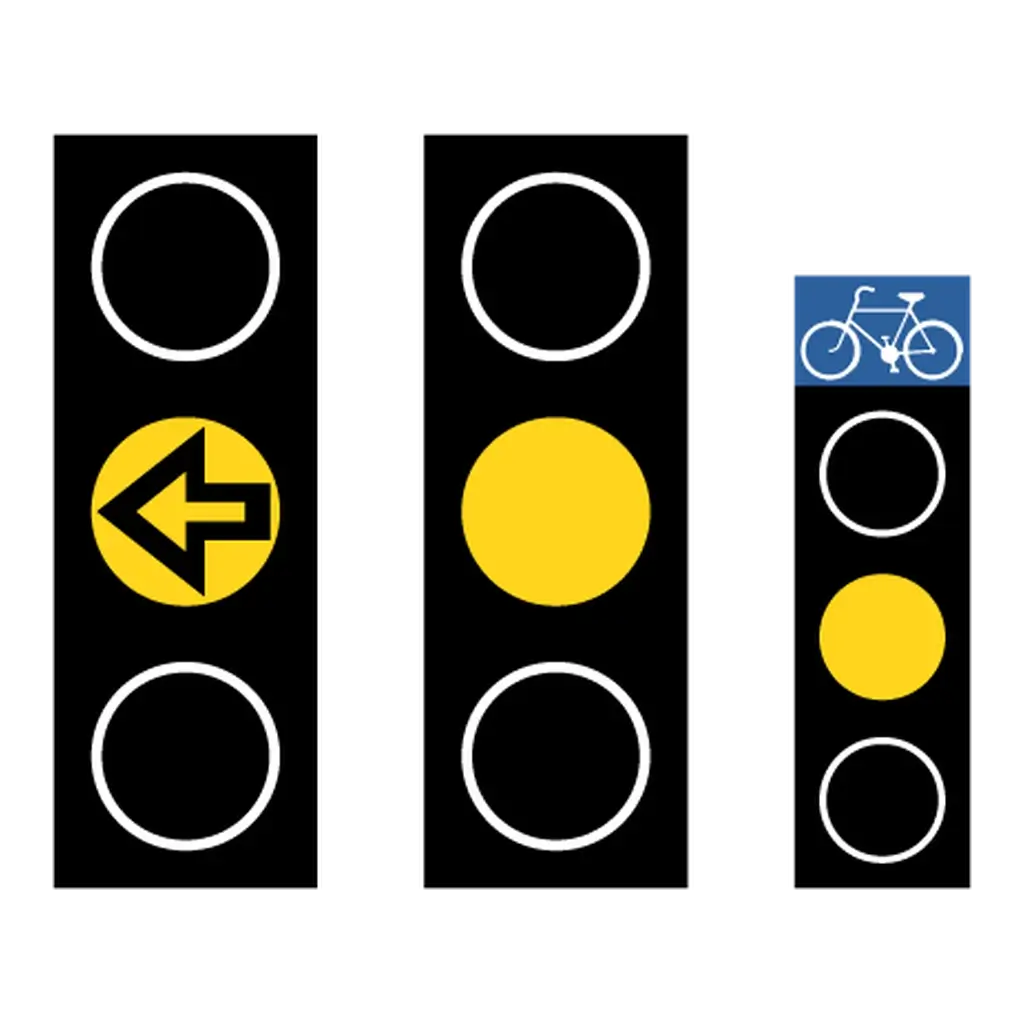
Amber signal
SIG4 · Gult ljus
A steady amber light means stop. You may only continue if you are so close to the signal when it turns amber that stopping would be dangerous.
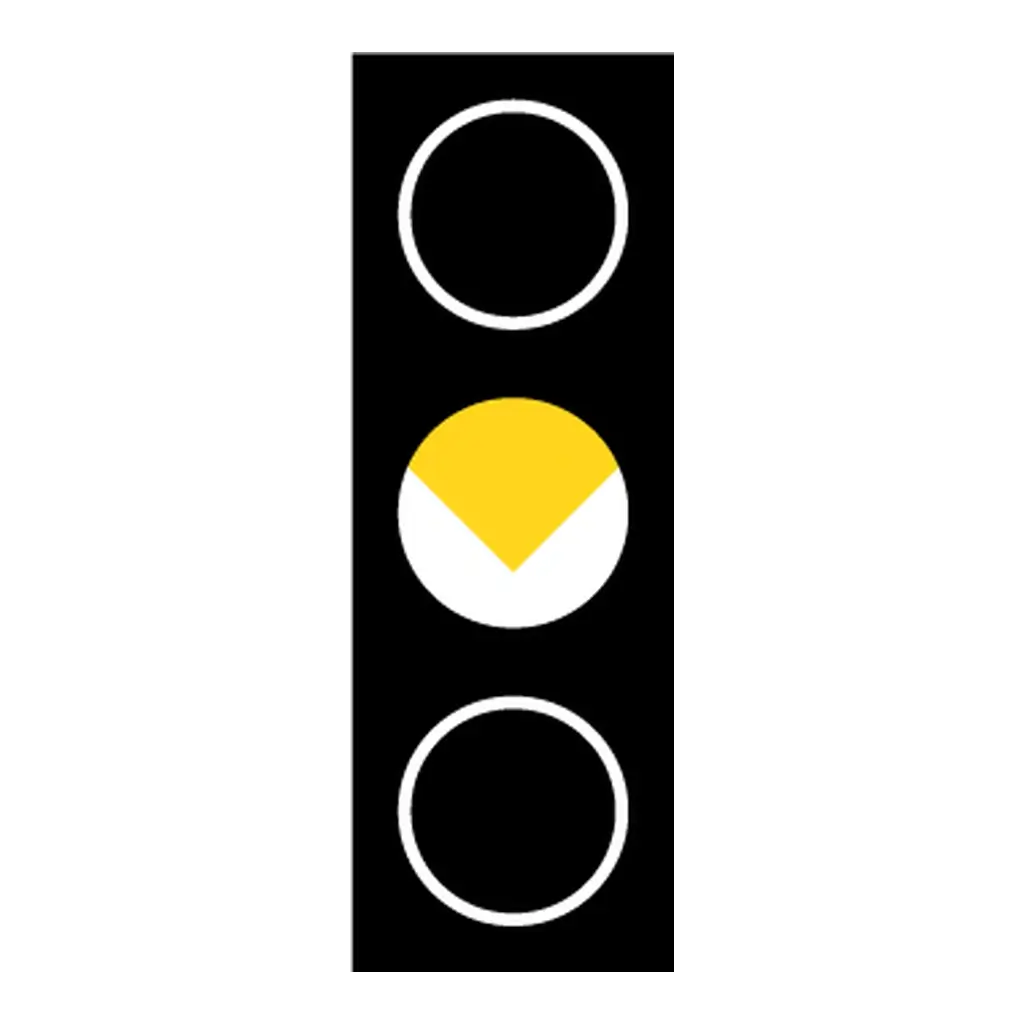
Flashing amber
SIG5 · Blinkande gult ljus
A flashing amber light means you must take particular care when passing. The signal does not decide who has priority – road signs and the normal give-way rules, such as the right-hand rule, apply instead. Drive with extra attention.
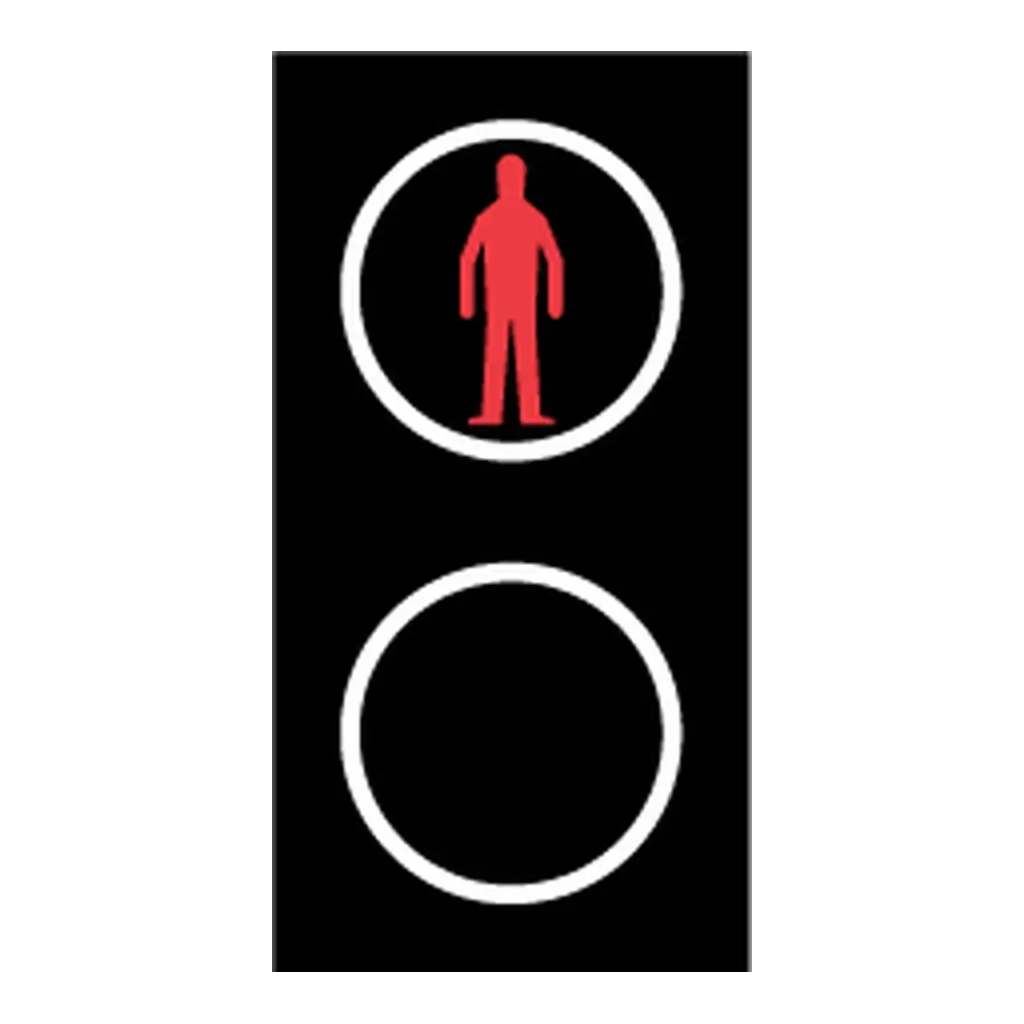
Acoustic signal – do not cross
SIG6 · Akustisk signal – gå inte
The acoustic signal indicates that pedestrians must not cross. It is mainly intended to assist visually impaired pedestrians.
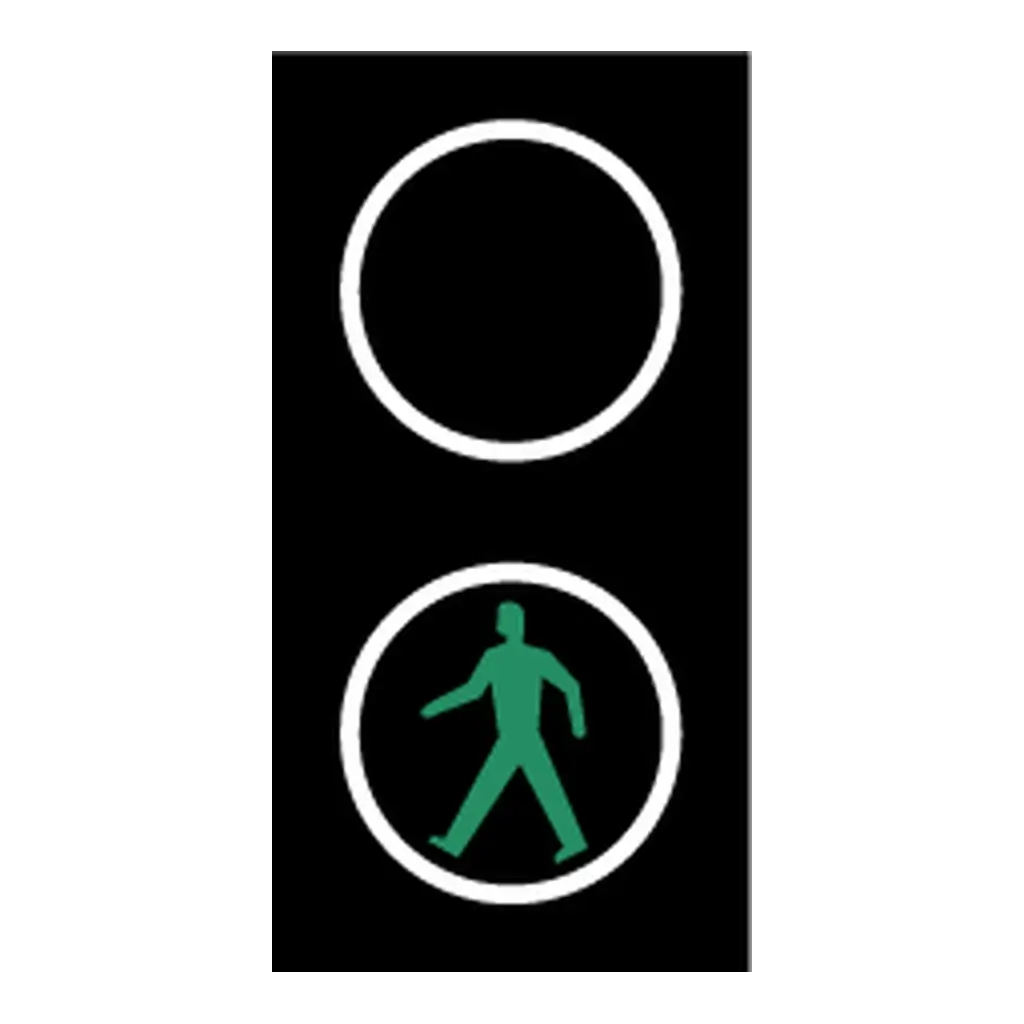
Acoustic signal – crossing permitted
SIG7 · Akustisk signal – gå
The acoustic signal indicates that pedestrians may cross. It is mainly intended to assist visually impaired pedestrians.
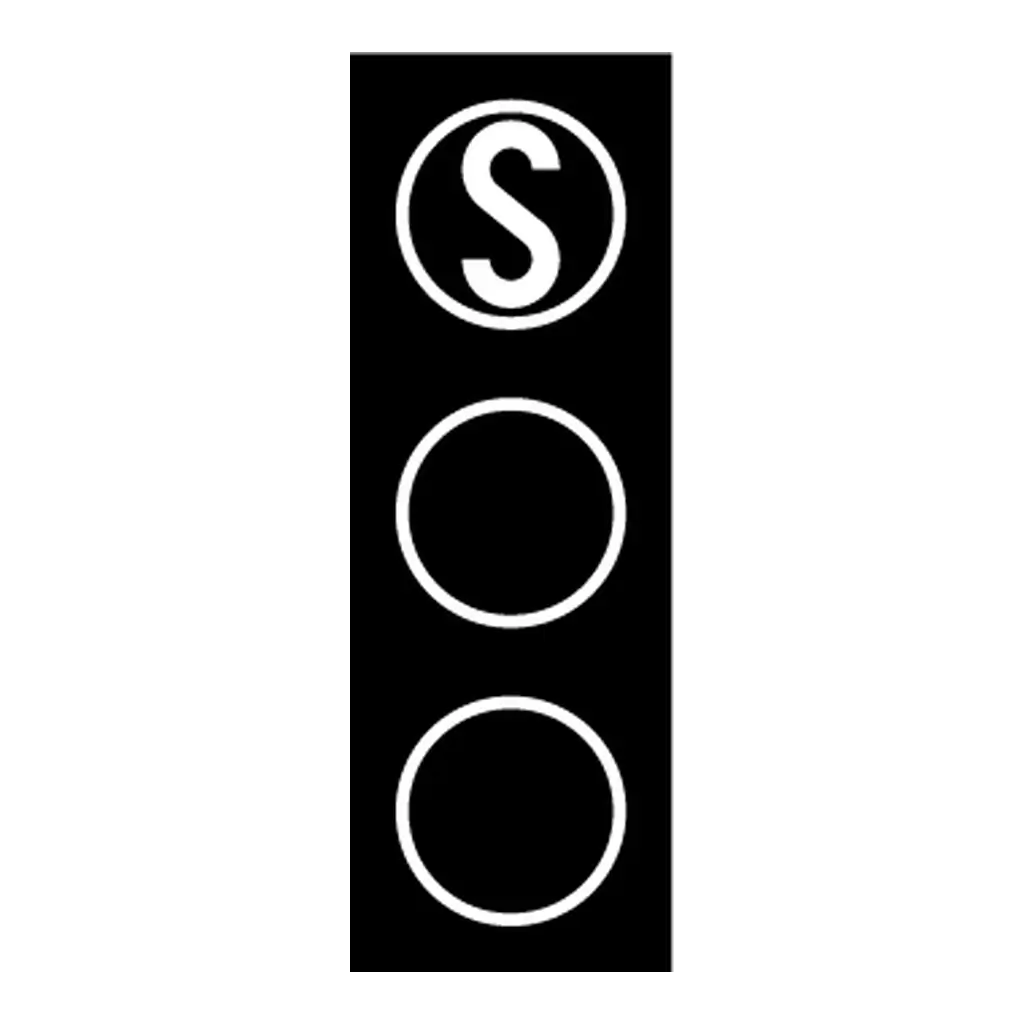
Public transport signal S (stop)
SIG8 · Kollektivtrafiksignal S (stopp)
Signal aspect S in a public transport signal means stop: vehicles in regular public transport service and trams may not pass the stop line or, if there is none, the signal. Public transport signals apply to drivers of vehicles in regular public transport service and trams.
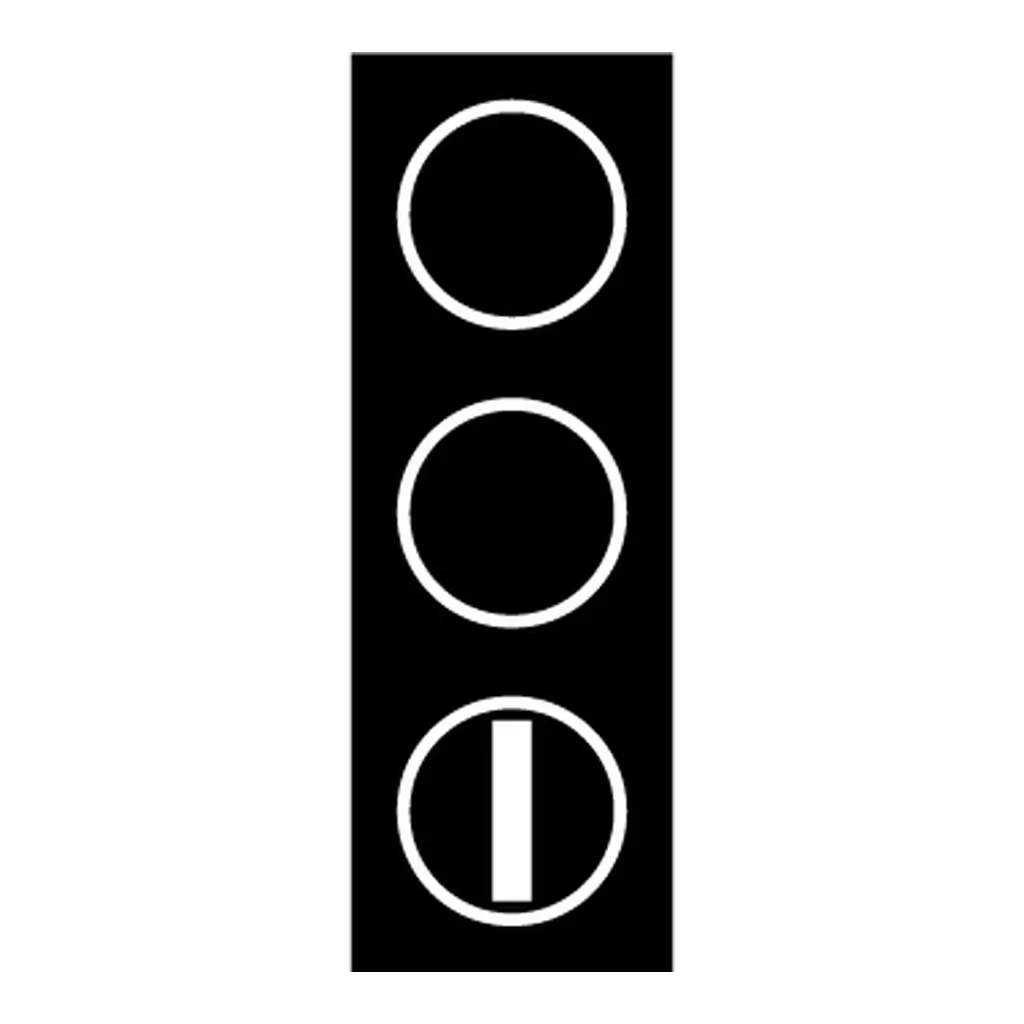
Vertical line or arrow (public transport signal)
SIG10 · Lodrätt streck eller pil (kollektivtrafiksignal)
A vertical line or an arrow in a public transport signal means that vehicles in regular public transport service and trams may continue straight ahead. Public transport signals apply to drivers of vehicles in regular public transport service and trams. If the signal is placed at a lane reserved for public transport vehicles, it applies to everyone driving in that lane – other traffic follows the ordinary traffic signals.
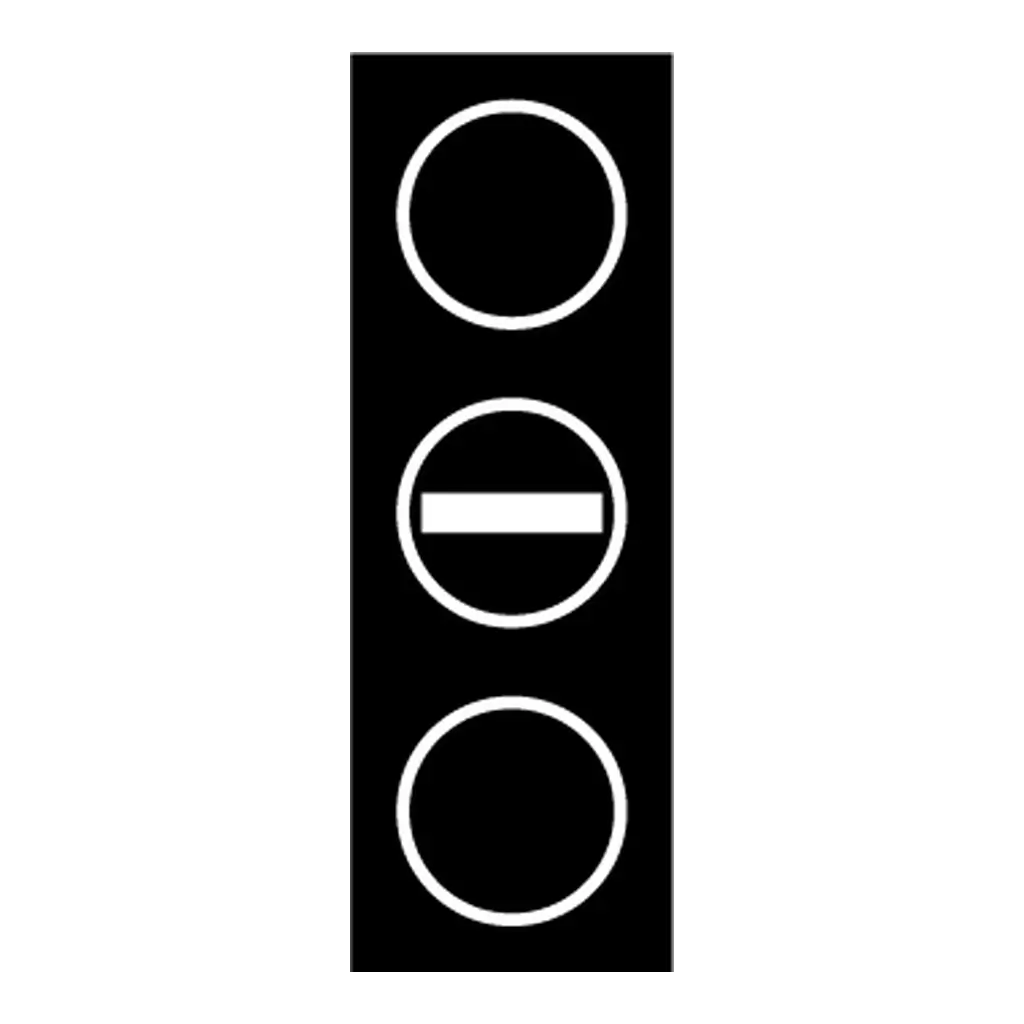
Stop (Horizontal Bar)
SIG11 · Stanna (vågrätt streck)
A horizontal bar in a public transport signal means Stop. Vehicles in regular public transport service and trams may not pass the stop line, or the signal itself if there is no stop line, unless they are already so close when it changes that they cannot stop safely.

Lane closed (red cross)
SIG12 · Körfält avstängt (rött kryss)
A red cross above a lane means the lane, and where applicable the shoulder next to it, is closed to traffic. You must move to an open lane and leave this lane in good time.
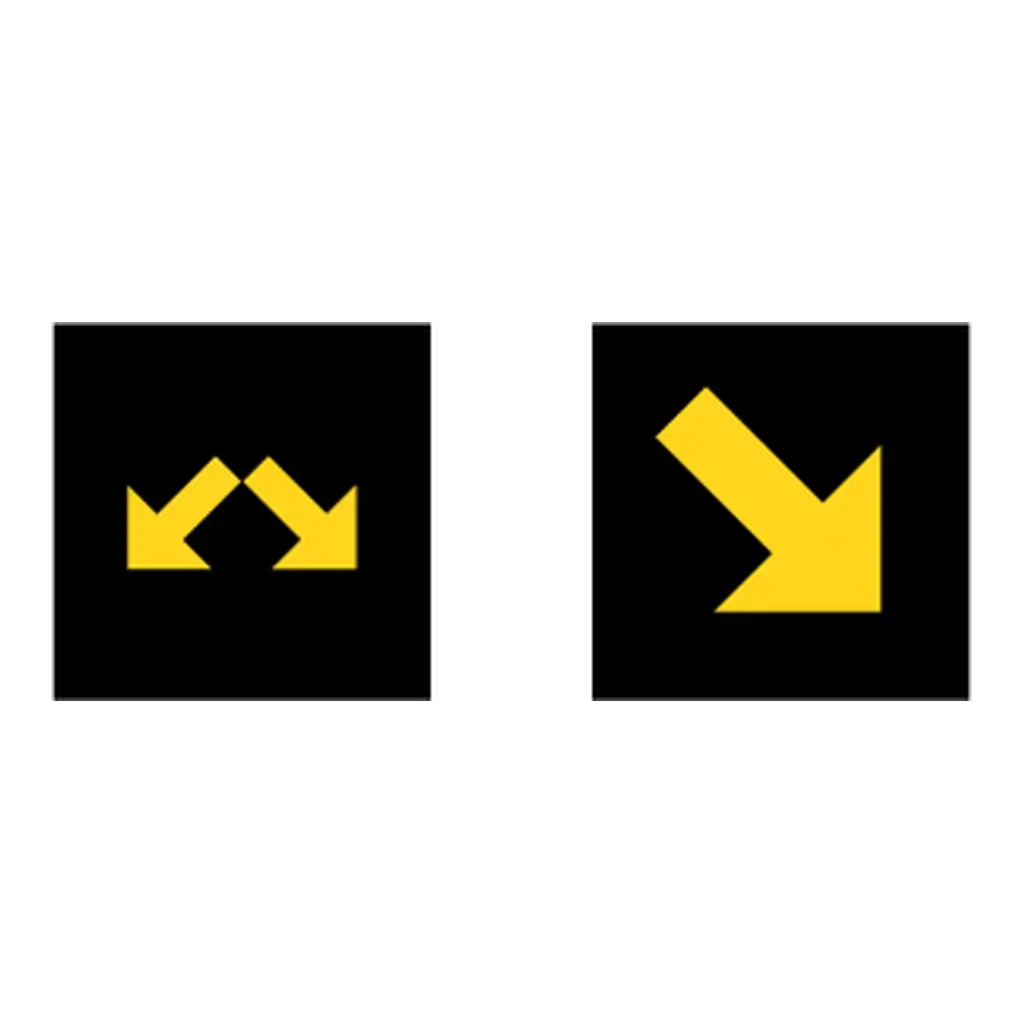
Amber arrow — change lane
SIG13 · Gul pil — byt körfält
A flashing or steady amber arrow over a lane tells you that the lane will soon be closed and you must change to the lane indicated by the arrow. Move over in good time.

Green arrow — lane open
SIG14 · Grön pil — körfältet är öppet
A green arrow pointing downwards over a lane means the lane is open for travel in your direction. You may use the lane while still obeying signs and other signals.

Flashing red light
SIG16 · Blinkande rött ljus
One or two flashing red lights, for example at a level crossing, swing bridge or fire-station exit, mean stop. Wait until the lights have gone out before you continue.
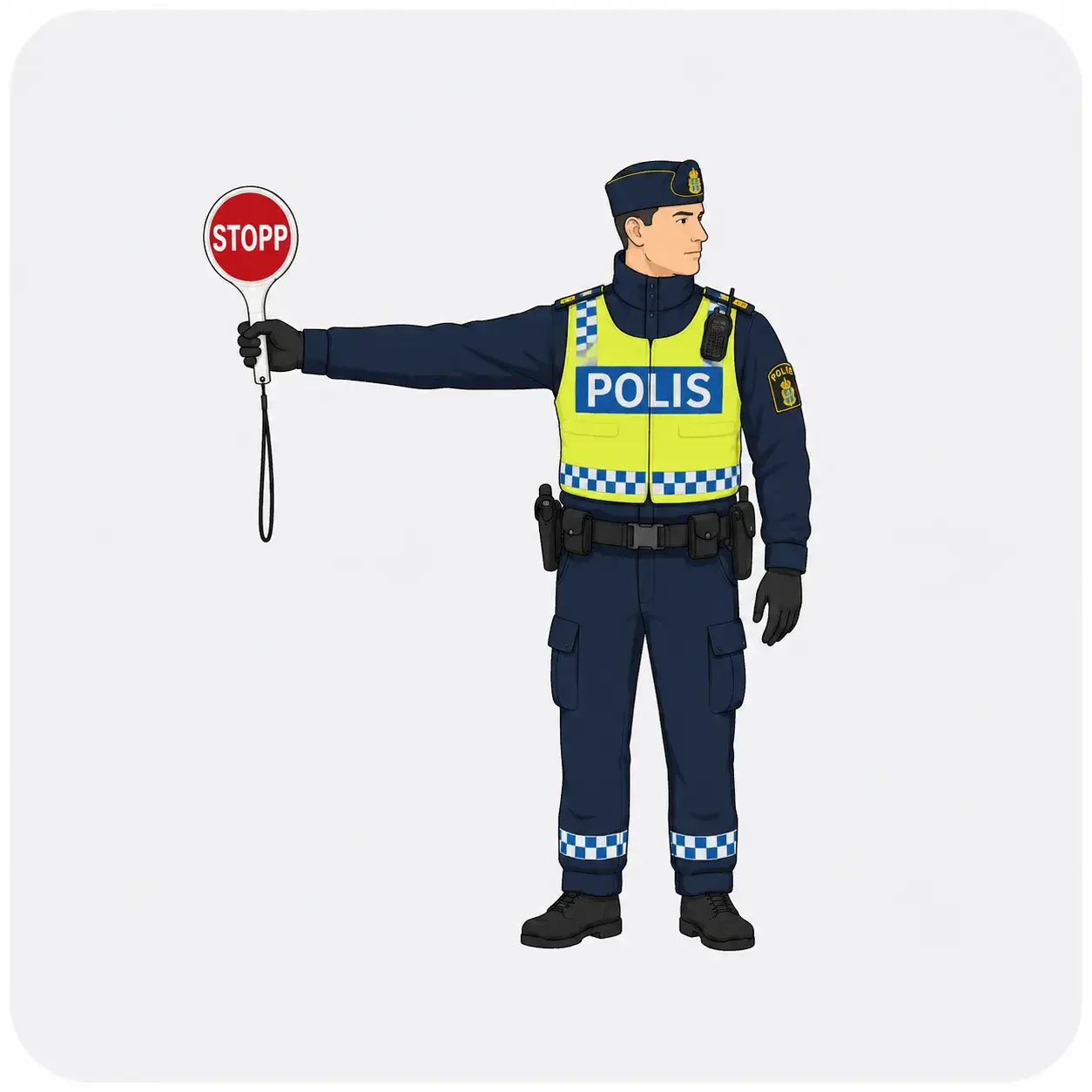
Traffic controller signal: Stop
V1 · Tecken av vakt: Stopp
This signal is given by a traffic controller directing traffic and means stop for the road users the controller is facing. You must stop and follow the controller's instructions – signals from a traffic controller must be obeyed in the same way as road signs and traffic signals.
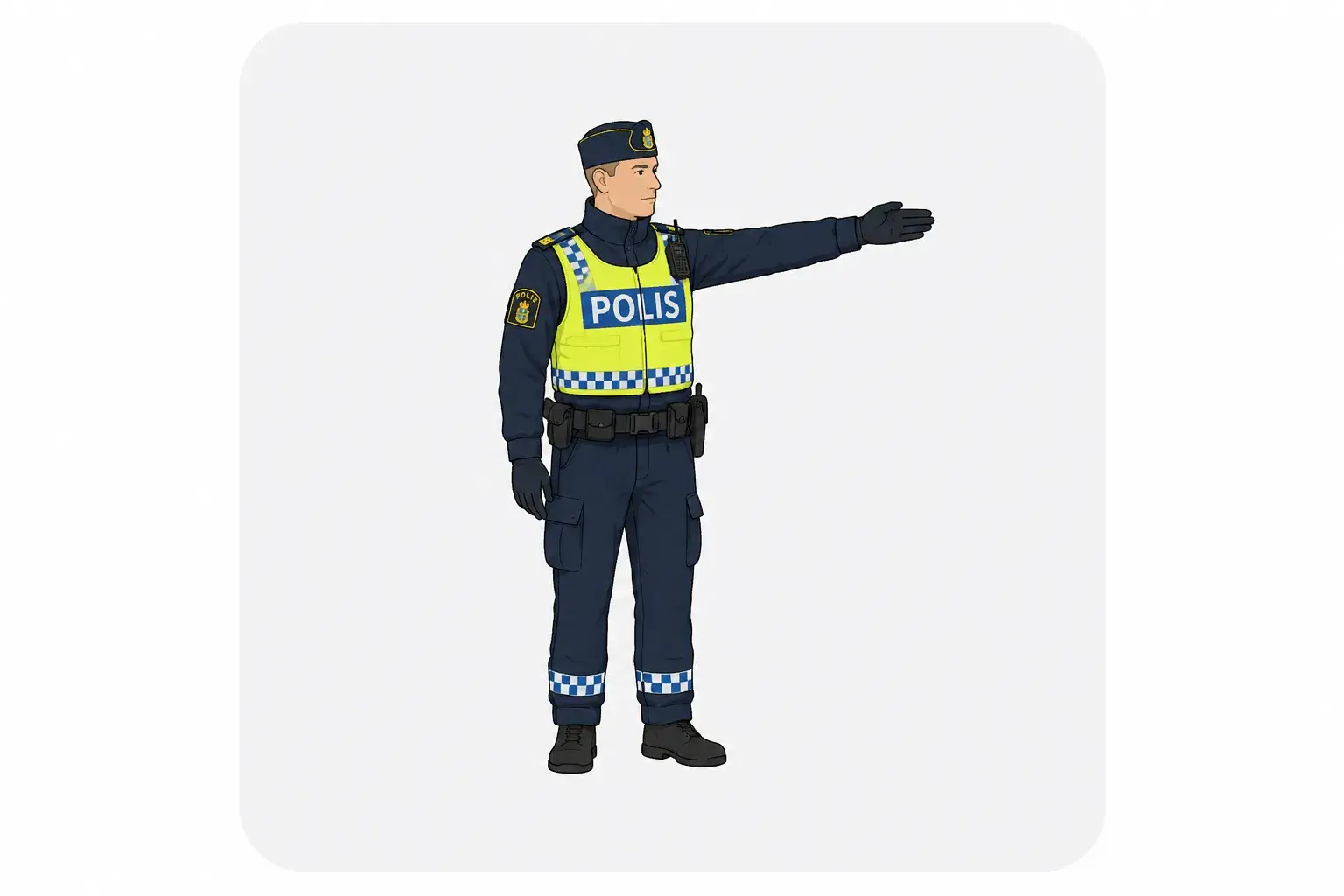
Drive on
V2 · Tecken av vakt: Kör fram
The traffic officer signals that you may proceed. Drive past the officer in the direction indicated and continue with normal caution. Officer signals take priority over signals and signs.
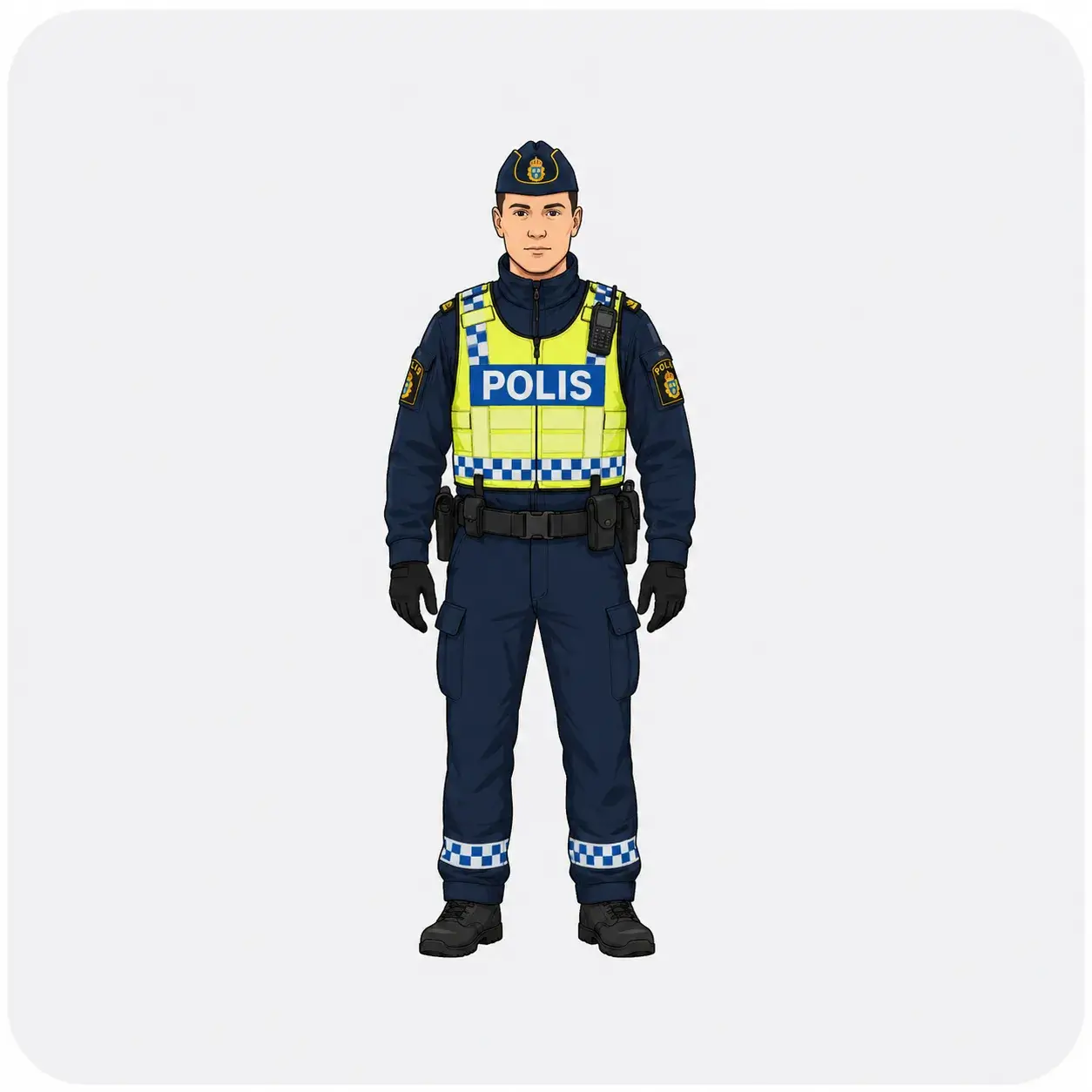
Traffic officer identification mark
V3 · Kännetecken för vakt
An identification mark worn by a traffic controller directing traffic. It must be worn on both the front and the back so that it is clearly visible that the person is authorised to give signals to traffic.
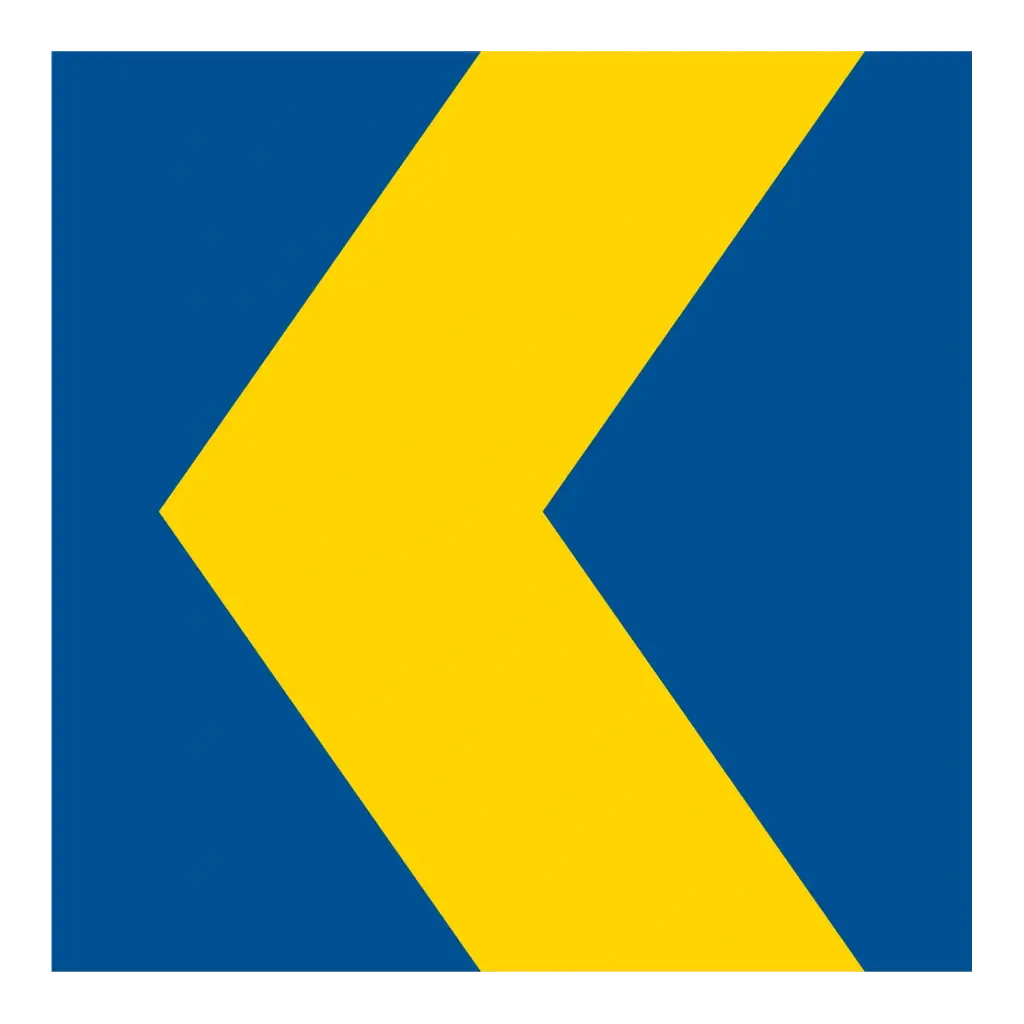
Marking arrow (Markeringspil)
X1 · Markeringspil
This device indicates that drivers must turn sharply in the direction of the arrow, for example because of a sharp curve or the end of the road. The number of arrows is adapted to conditions at the location. At roadworks the device is red and yellow.
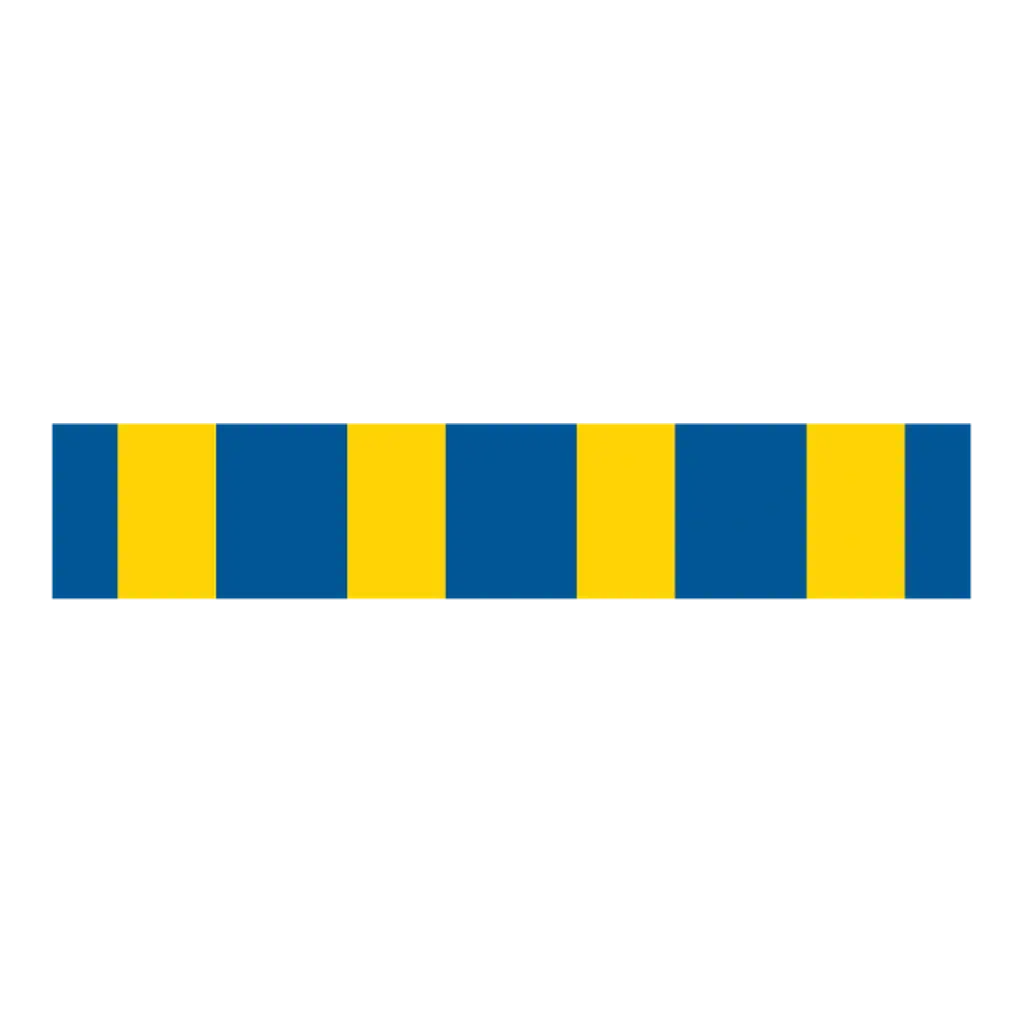
Marking for obstacle
X2 · Markeringsskärm för hinder
Marks an obstacle on or beside the carriageway, such as a bridge pillar, traffic island or roadworks barrier. Reduce speed and pass with particular care.
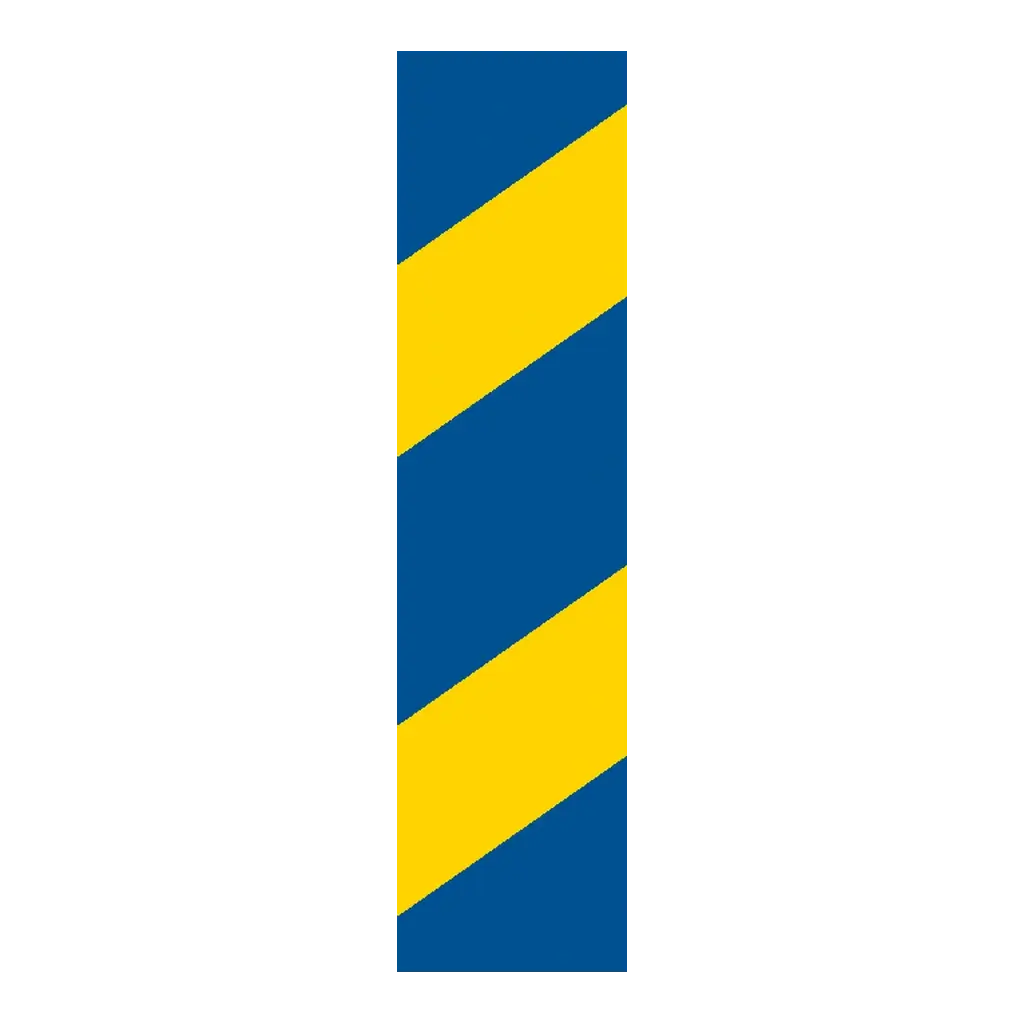
Marking for obstacle on the side, speed bumps, etc.
X3 · Markeringsskärm för sidohinder, farthinder med mera
Marks a lateral obstacle, speed hump or similar feature next to or in the carriageway. Adapt your speed and steering so that you pass safely.

Exit marker
X4 · Avfartsskärm
Marks the dividing point between the main carriageway and an exit slip road with a deceleration lane. From this point on you are on the exit lane and may slow down to leave the road.
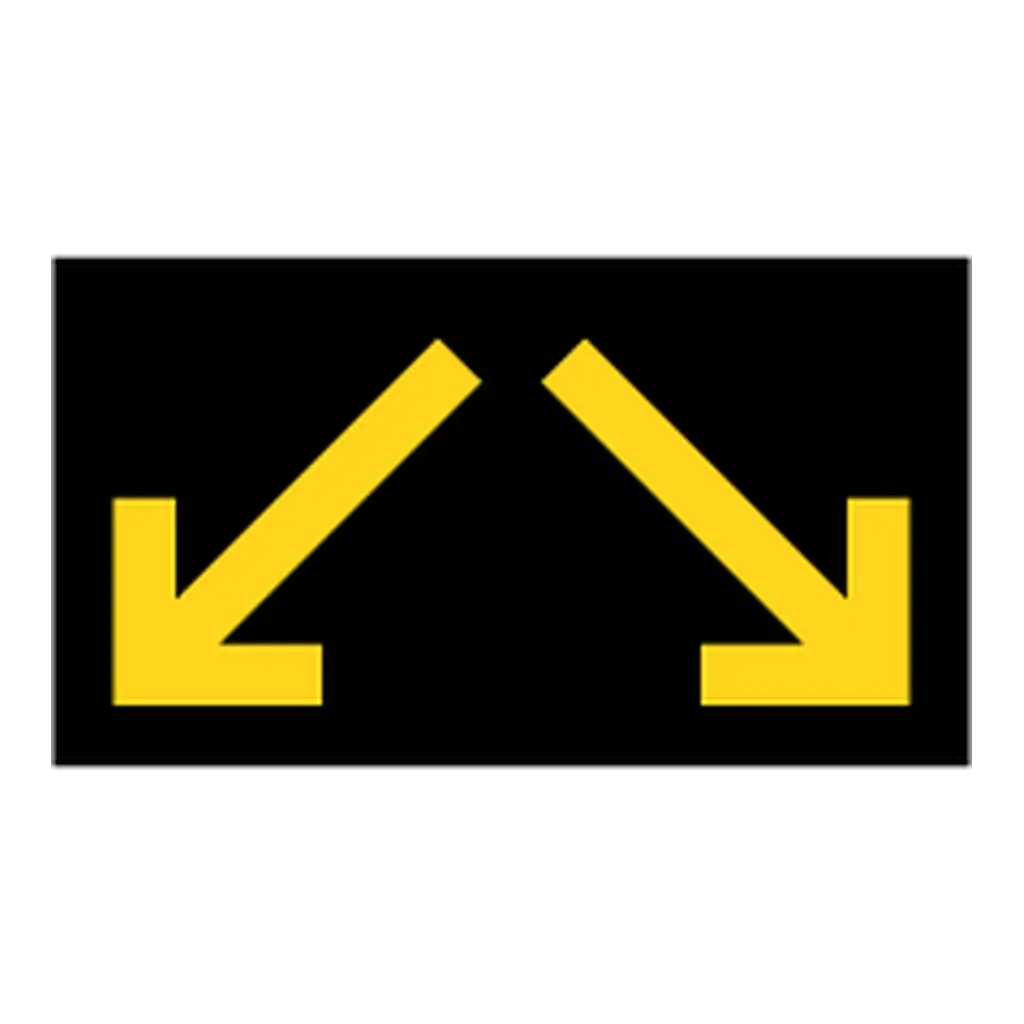
Flashing amber arrow or arrows
X5 · Gul ljuspil eller ljuspilar
A flashing amber arrow (or arrows) mounted on a vehicle, trailer or barrier, indicating an obstacle ahead and the side on which to pass. Used at roadworks, accident sites and slow-moving works vehicles; reduce speed and follow the direction shown.
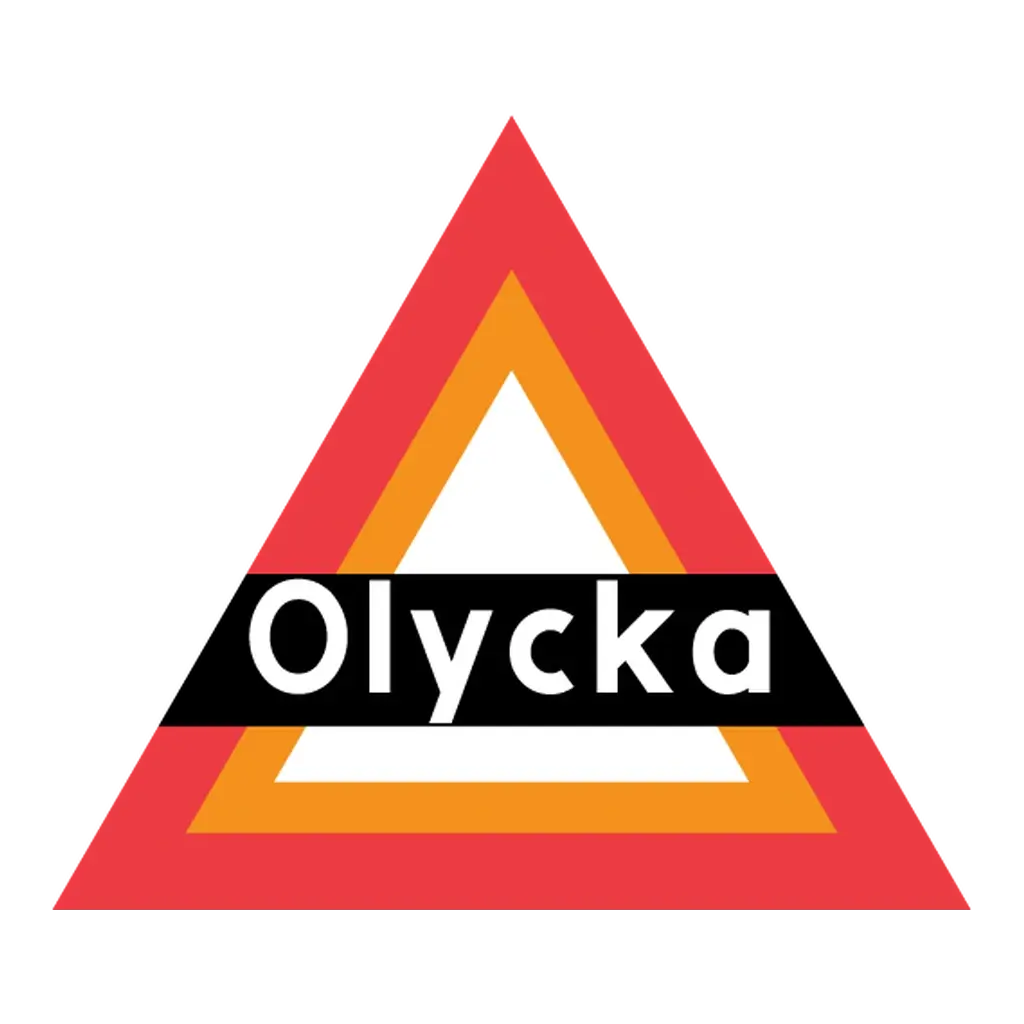
Special warning device
X6 · Särskild varningsanordning
A portable warning device (often a fold-out warning tent) placed at the roadside to show that a road's accessibility is temporarily restricted, for example due to an accident or roadworks. The wording is adapted to the reason (e.g. "Olycka"/Accident, "Vägarbete"/Roadworks). Slow down and stay alert.
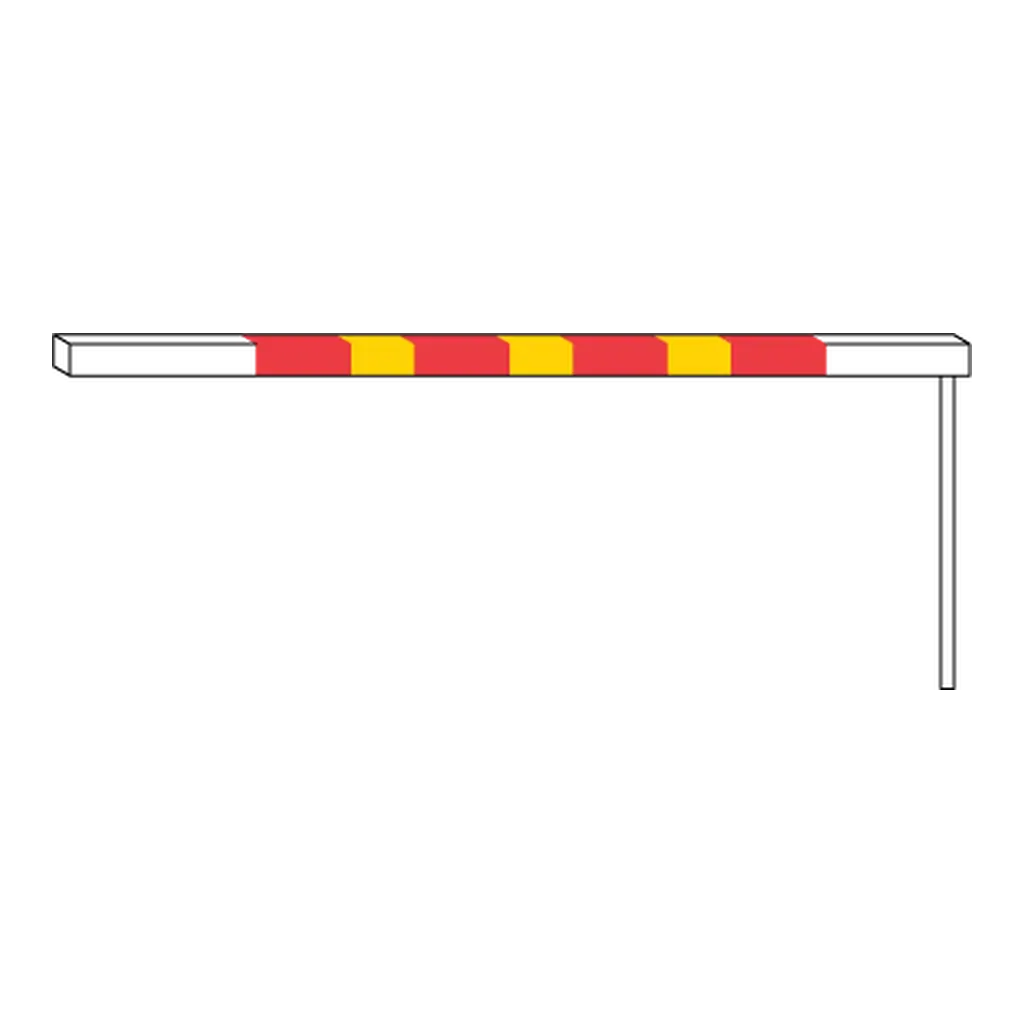
Barrier
X7 · Vägbom
A physical barrier closing off a road, lane or area to traffic. You must not pass the barrier; find an alternative route or wait until it is removed.
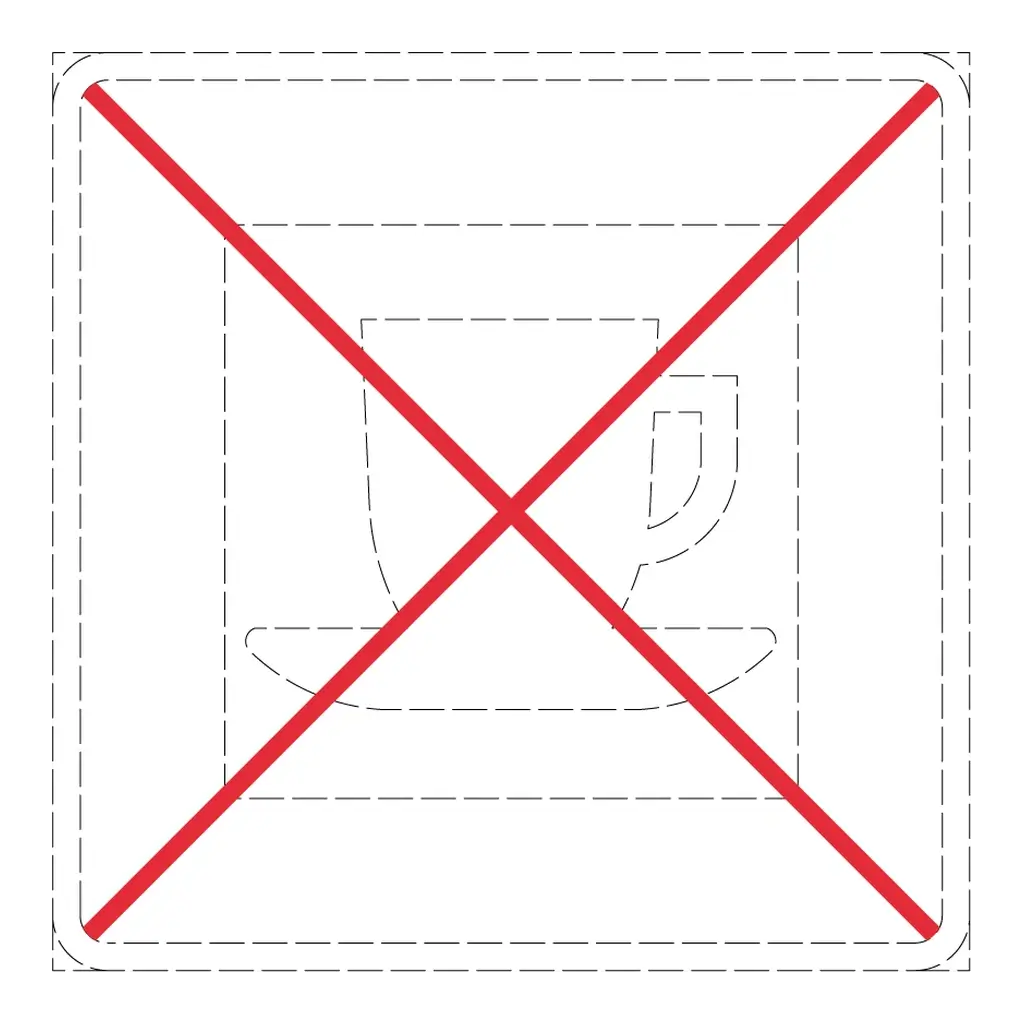
Temporary closure
X8 · Tillfällig stängning
Indicates that the directional information on another sign — pointing to a place, facility or service such as a café or rest area — is temporarily not valid. The device repeats the pictogram from that sign with a red cross through it; for example, a crossed-out coffee cup means that particular service is temporarily closed.
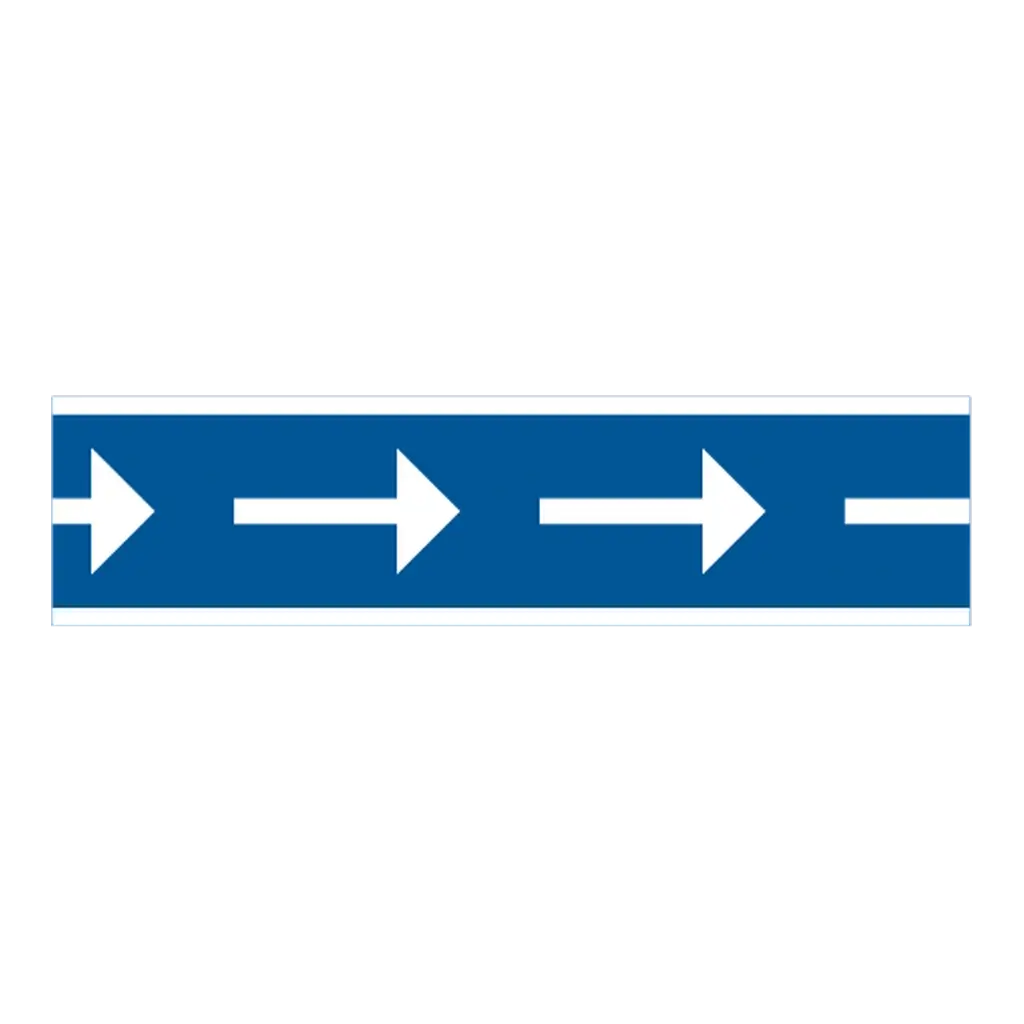
Roundabout traffic
X9 · Cirkulationstrafik
Marks the centre island of a roundabout. Drive counter-clockwise around the marker (keeping the island on your left) and give way to traffic already in the roundabout.
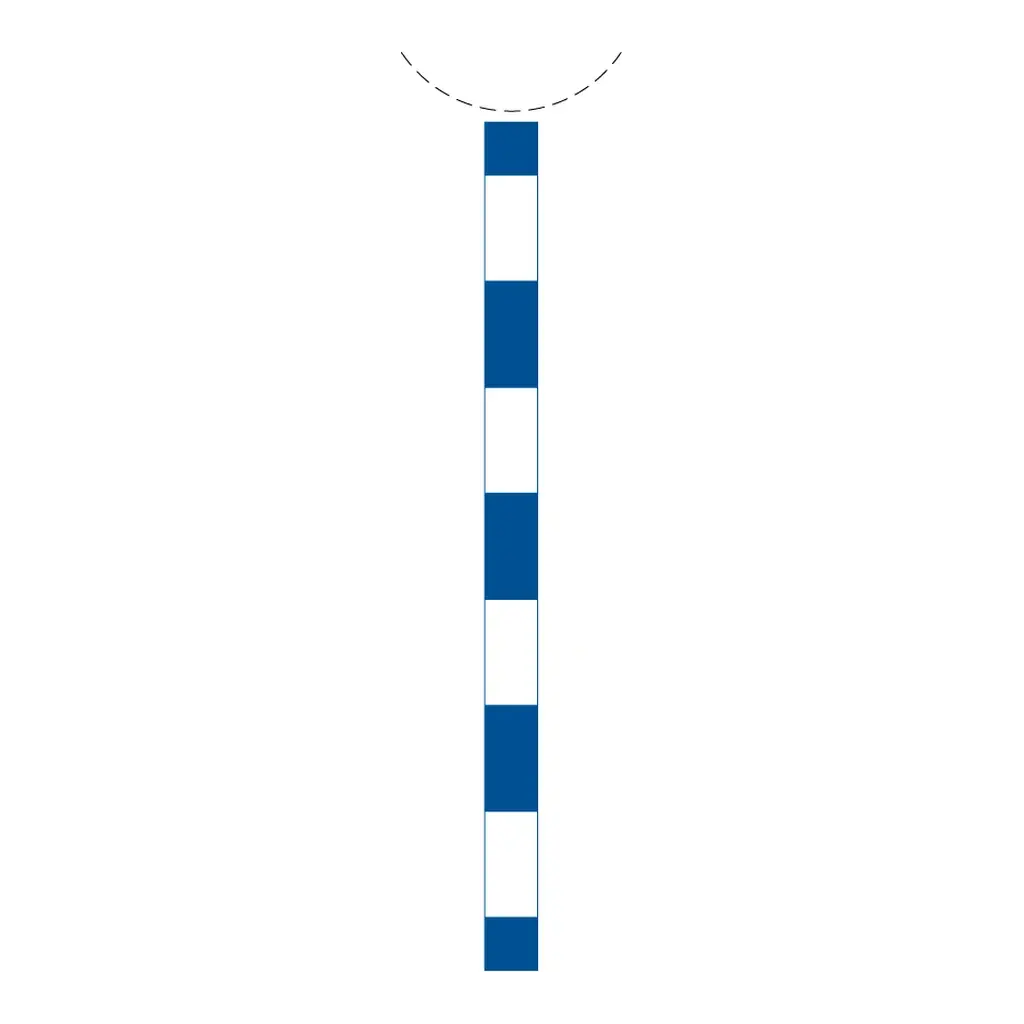
Pole marker
X10 · Stolpmarkeringsanordning
This device is fitted to the post or frame that carries a road sign or other device and makes the sign easier to spot. It normally has the same colours as the sign it is mounted below. It does not by itself impose any prohibition or obligation.

Red flashing light
Y1 · Blinkande rött ljus
Flashing red lights at a level crossing warn that a train is approaching or the crossing is otherwise closed. You must stop before the lights and may only proceed when the lights have gone out.
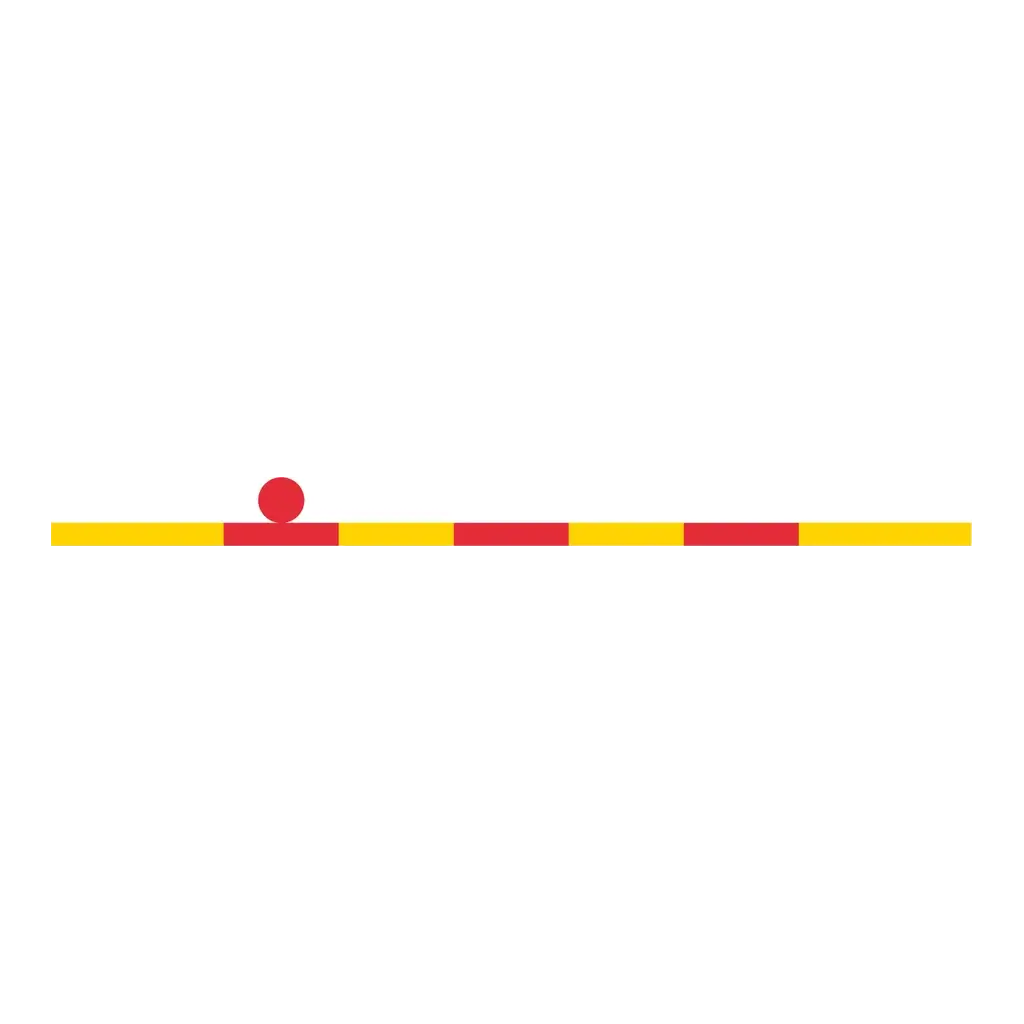
Barrier
Y3 · Vägskyddsbom vid plankorsning
A barrier at a level crossing that lowers when a train is approaching. You must stop and wait behind the barrier; never drive around or under a closing or lowered barrier.
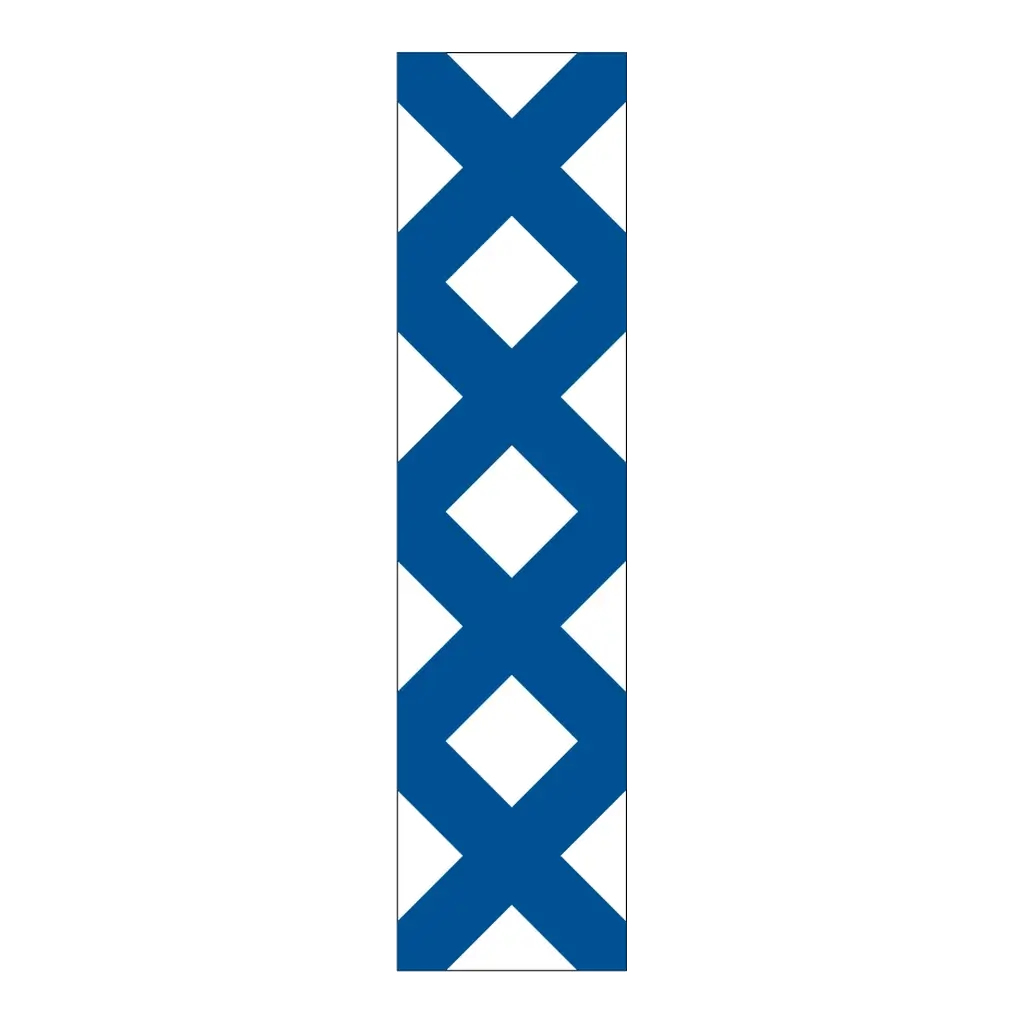
Level crossing screen
Y4 · Plankorsningsskärm
A blue-and-white lattice-patterned screen placed near a level crossing to make it easier to spot in good time. Its exact design is adapted to local conditions and it can also be mounted horizontally. It does not indicate distance to the crossing.