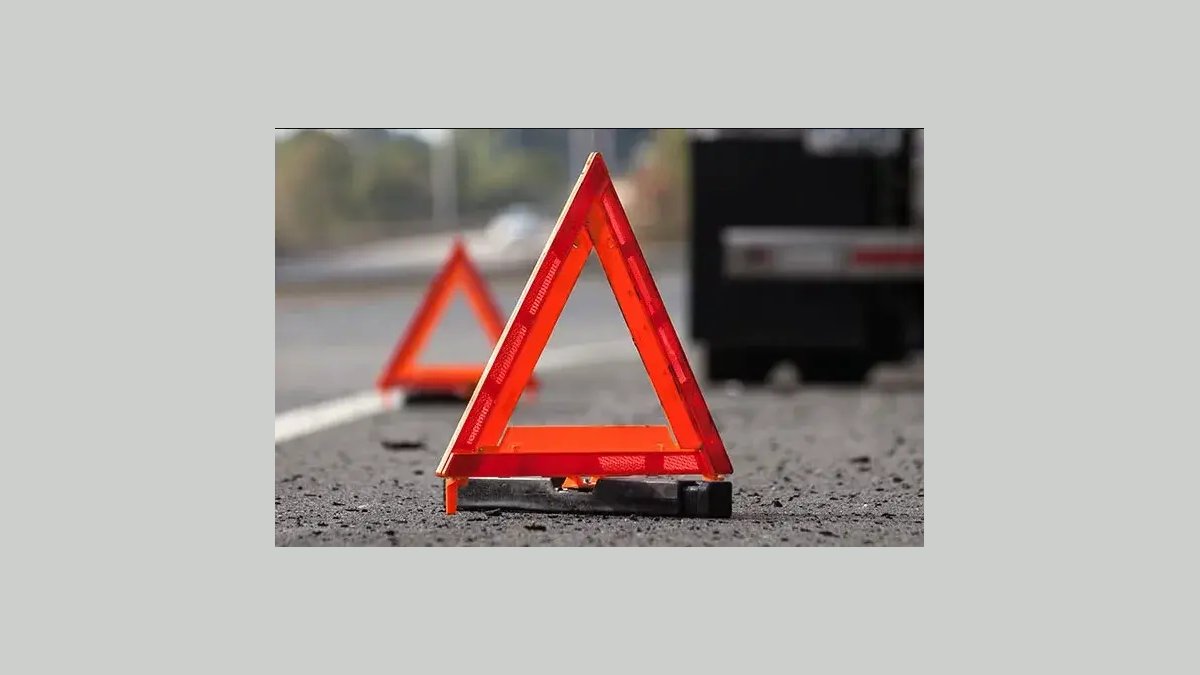
Short answer: If your car breaks down in Sweden, follow Trafikverket’s advice: warn, leave and call for help. Look for a safe place to stop, use warning lights, and place the warning triangle at least 100 metres away if that is safe. Leave the car and road quickly, and call 112 if life is in danger.
Recognise the problem and choose a safe place
A warning light, unusual noise or loss of power can mean that continuing is unsafe. Stay calm and keep control of the vehicle. Look ahead for a place where you can stop without creating another danger. If the car can still move, getting it to a safer position may be better than stopping in a live lane.
Trafikverket’s advice is to warn, leave and call for help when a vehicle stops unexpectedly. The order depends on the situation. On a fast road, your first concern is where the car and its occupants will be while other traffic approaches. Do not let a mechanical problem pull your attention away from steering and the road.
Imagine a tyre failure on a busy road. Reduce speed while maintaining control, indicate if possible and seek a safe stopping place. Once stopped, assess the traffic before opening a door. A problem that seems small inside the car can become serious if someone steps into a lane to inspect it.
Warn traffic without putting yourself in danger
Use the vehicle’s warning lights when appropriate so others can see that you are stopped. A warning triangle is required where the highest permitted speed is higher than 50 km/h. Trafikverket also notes that a triangle may be needed in other situations. Read the road and avoid treating one number as the whole safety decision.
Trafikverket advises placing the warning triangle at least 100 metres away, preferably farther, while keeping yourself safe. The aim is to give approaching drivers useful warning. A bend, hill or poor visibility changes where warning is useful. If reaching a suitable place would expose you to traffic, seek safety first and call for help.
A learner can practise locating the triangle in a parked car. Find where it is stored, learn how it opens and put it away correctly. You should not discover these details while standing beside a moving lane. Ask your instructor how the specific vehicle’s warning lights work as well.
Leave the vehicle and road safely
After stopping, get out only when it is safe. On a road with fast traffic, the side away from moving vehicles may offer a safer exit. Trafikverket advises leaving the car and road as soon as possible when a vehicle has stopped in a dangerous location. If a barrier is present, move behind it when safe.
Keep other occupants together in a safe place. Do not stand in front of or behind the stopped car to discuss the problem. Other drivers may notice the obstacle late. If a passenger needs help getting out, plan the movement from inside the car and watch the traffic before opening a door.
Do not begin a repair simply because you have a tool in the boot. A tyre change or a check under the bonnet may require you to stand close to traffic. Decide first whether the location is safe for that work. A recovery service or another suitable form of assistance may be the safer choice.
Practise with explanations
Körkort Hero offers 1,700+ practice questions in Trafikverket exam style, with explanations, and works fully offline without ads.
Know when to call 112
If there is danger to life, call 112. Give your location, the road you are on, the direction of travel if relevant, and a clear description of the danger. Follow the operator’s instructions. If you are uncertain of the exact position, use road signs, nearby exits or a map to help describe it.
Not every breakdown is a life-threatening emergency. If the car is in a safe place and no one is injured or exposed to traffic, use the appropriate breakdown assistance for the vehicle. Trafikverket’s guidance distinguishes seeking help from making an emergency call. State what has happened accurately rather than trying to classify it from memory.
If the vehicle has stopped on a motorway or another high-speed road, avoid walking along the carriageway. Keep away from moving traffic and give your precise position to the help provider. A missed appointment or the cost of recovery is less important than keeping people away from the road.
Practise the sequence before a breakdown
Before a journey, find the hazard-light switch, warning triangle and the vehicle’s assistance information. If you share a car, ask the owner where these items are. Also check whether your passengers know to wait for your instruction before opening a door after an unexpected stop.
During a lesson, talk through different locations: a quiet street, a bend on a rural road and a motorway shoulder. Explain where you would try to stop, how you would warn others, where you would wait and whom you would call. The sequence should adapt to the place rather than become a memorised slogan.
For theory questions, identify the immediate danger before choosing an answer. A stopped car, limited visibility and fast passing traffic require different priorities from a car safely parked at home. The useful pattern is control the vehicle, reach safety, warn other road users, move people away from danger and request suitable help.
Frequently asked questions
When do I need a warning triangle in Sweden?
A warning triangle is required where the highest permitted speed is higher than 50 km/h. Trafikverket also notes that a triangle may be needed in other situations, so read the road instead of treating one number as the whole decision.
How far away should I place the warning triangle?
Trafikverket advises placing it at least 100 metres away, preferably farther, while keeping yourself safe. If reaching a suitable place would expose you to traffic, seek safety first and call for help instead.
When should I call 112 after a breakdown?
Call 112 if there is danger to life, and give your location, the road and a clear description of the danger. If the car is in a safe place and nobody is injured or exposed to traffic, use the appropriate breakdown assistance.