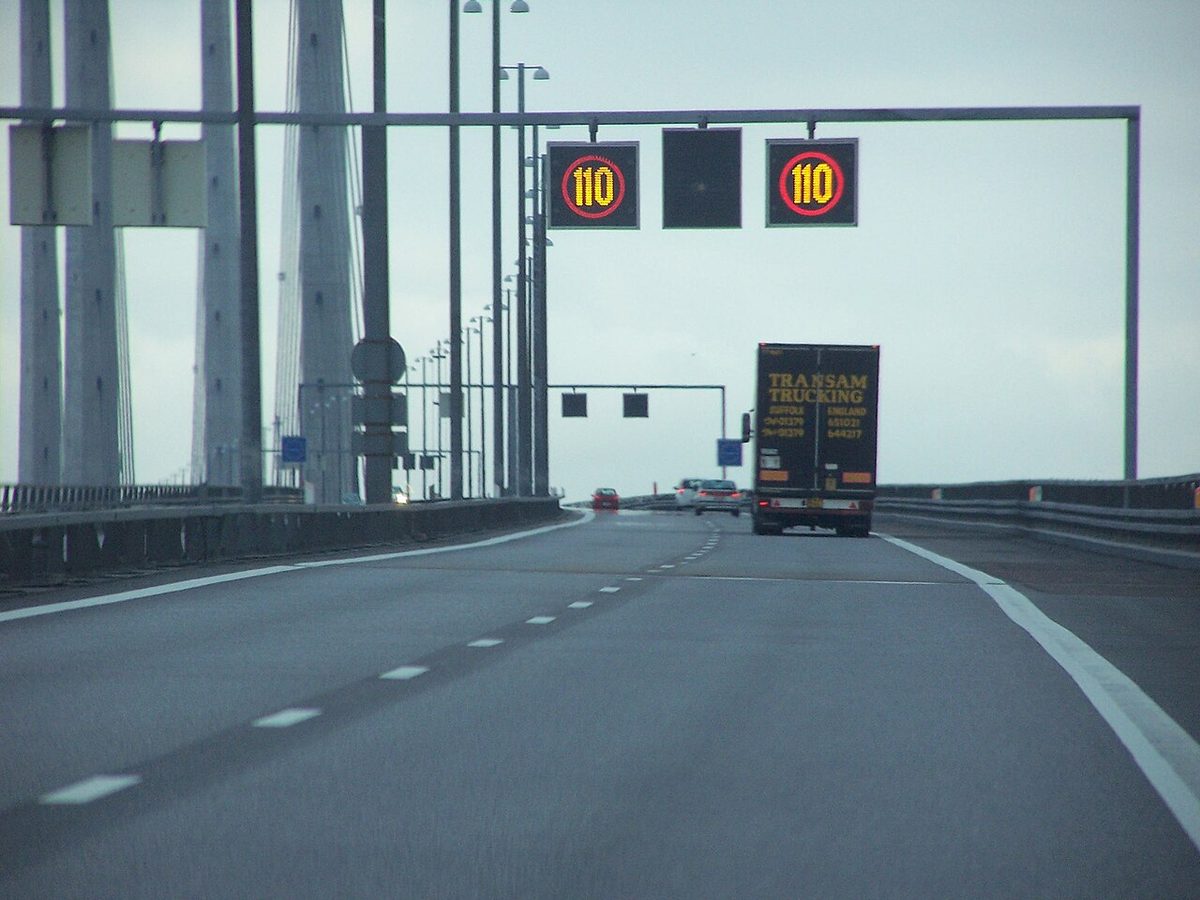

Short answer: In Sweden the basic speed limit is 50 km/h in a built-up area and 70 km/h outside one, unless another limit has been set. A posted limit is a maximum, not a target, and the safe speed can be lower depending on what you can see and the conditions.
Start with the sign, then consider the surroundings
A speed limit is the highest speed allowed under the applicable rule. It is not a target you must reach. In Sweden, the basic limit is 50 km/h within a built-up area and 70 km/h outside a built-up area unless another limit has been set. Read the signs as you enter a road and keep checking when conditions change.
A wide street can still have a low limit, while a narrow road can have a different posted limit. Road width and the number of lanes do not let you guess the legal speed. Imagine leaving a town onto an open road. Identify the relevant signs and area boundary first, then decide which speed rule applies.
Local rules and posted signs may set another limit. A learner should therefore separate two questions: what is the maximum permitted here, and what speed is safe right now? The answer to the second question can be lower. Practise saying both answers when you drive with an instructor or review a test image.
Read a built-up area correctly
A built-up area has a legal meaning in traffic rules. It is not simply a place that looks busy. The basic 50 km/h rule applies there unless a different speed has been set. If you enter a residential street, look for signs and surroundings instead of assuming the limit from the distance between houses.
Suppose the road is clear, with no vehicle immediately ahead. That does not remove the need to consider people walking, bicycles, junctions and vehicles that may enter. The road environment can call for a speed below the legal maximum, especially where your view is interrupted by parked vehicles or buildings.
When studying, compare two pictures of the same street. One shows a clear view; the other shows a van blocking your view of a crossing. The legal limit may be the same, but your safe approach changes. Explain what you can see and where another road user might appear before choosing an answer.
Treat 70 km/h outside town as a default
Outside a built-up area, the basic limit is 70 km/h unless another limit applies. Many roads have a different posted limit. A learner should not memorise a single number for every rural road. Look for a speed sign and consider whether you have passed an area boundary or a new local instruction.
For example, a straight country road may invite a faster pace than a bend farther ahead. The posted maximum does not promise that the bend can be taken at that speed. Read the road ahead while there is still time to slow smoothly. The aim is to preserve control before the view becomes restricted.
If an exercise asks for the permitted speed, first identify the signs and location. If it asks how fast you should drive, also consider visibility, weather, traffic and the car. This distinction is common in practical driving too. You can obey a number on a sign while still driving too fast for the conditions.
Practise with explanations
Körkort Hero offers 1,700+ practice questions in Trafikverket exam style, with explanations, and works fully offline without ads.
Match speed to what you can see
Transportstyrelsen explains that you must be able to control the vehicle and stop within the road or terrain ahead that you can see, before any foreseeable obstacle. Think about a bend with trees beside it. A vehicle or person could be hidden beyond your visible stretch. Slow early enough to leave room to respond.
Rain, snow, glare and darkness can reduce what you see or change how the car behaves. A vehicle carrying a heavy load may also feel different. The rule is to adapt speed to the road, terrain, weather, sight, vehicle, load and traffic. A posted limit stays a maximum; it does not cancel these conditions.
Consider a road with a legal limit that seems comfortable in dry daylight. On a rainy evening, the same stretch may need a lower speed. Do not calculate a universal replacement number from this example. Instead, look at the available view and the space needed to react and stop. That is the decision the driver must make.
Build a useful speed-check routine
Before each change of road, ask: Have I seen a speed sign or an area boundary? What is the maximum here? What limits my view? Are there people, crossings, side roads or animals nearby? Is the surface slippery? This short sequence links the legal rule to the actual driving task.
During a lesson, choose one stretch and discuss it after you stop. Describe why you selected your speed and which observation would make you slow further. A reason such as “the bend hides the road” is more useful than saying only “it felt safe.” It identifies what you can check next time.
For theory practice, challenge any answer that relies only on the shape of the road. A motorway-looking road, a quiet village street and an empty rural lane all require the same order of thought: identify the applicable limit, then decide whether conditions require less. This habit helps you understand new scenarios instead of memorising photographs.
Frequently asked questions
What is the default speed limit in built-up areas in Sweden?
The basic limit within a built-up area is 50 km/h, unless a different speed has been set. A built-up area has a legal meaning, so look for signs and boundaries instead of judging by how busy a place looks.
What is the speed limit outside towns in Sweden?
Outside a built-up area the basic limit is 70 km/h unless another limit applies. Many roads have a different posted limit, so check for speed signs and area boundaries rather than memorising one number for every rural road.
Can I drive at the speed limit if conditions are bad?
Not necessarily. The posted limit stays a maximum. You must be able to control the vehicle and stop within the road you can see, so rain, snow, glare, darkness, load or traffic may require a lower speed.