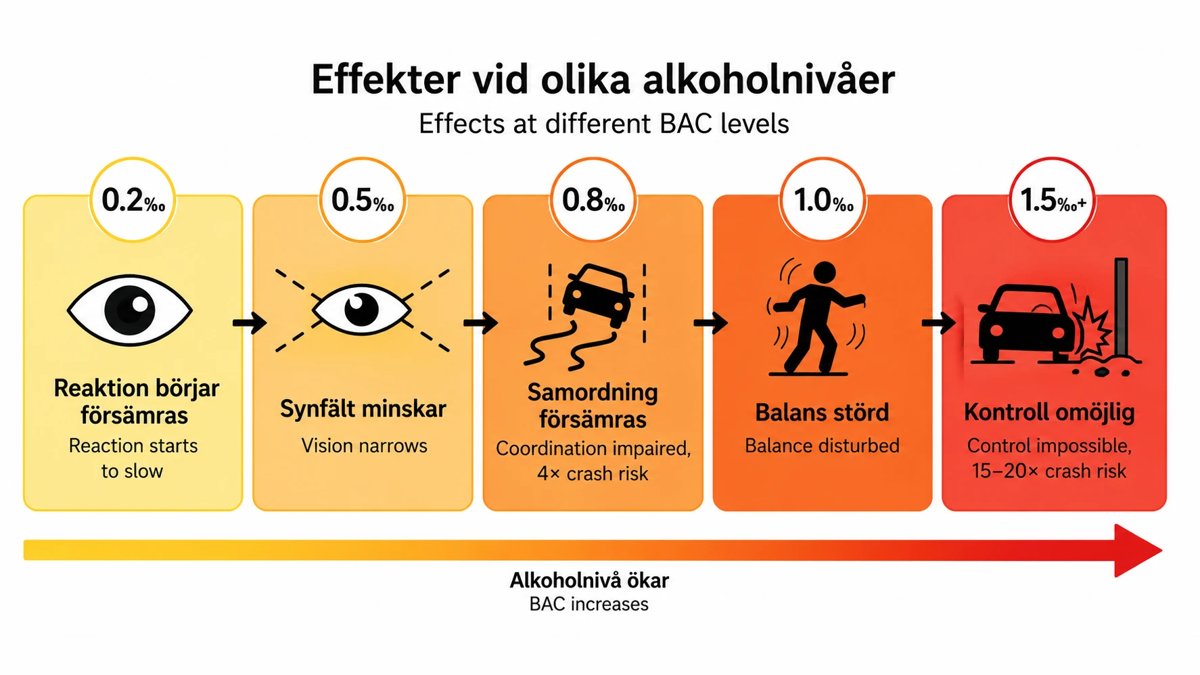
Short answer: In Sweden, a blood alcohol concentration of 0.2 per mille or higher is illegal when driving, and gross drink driving starts at 1.0 per mille or higher. Driving with a narcotic-classified substance in the blood is prohibited, with an exception for medicine used as prescribed by a doctor.
Know the alcohol thresholds
Sweden sets a clear blood alcohol threshold for driving. A concentration of 0.2 per mille or higher is illegal. The threshold for gross drink driving is 1.0 per mille or higher. These figures describe alcohol in blood, not the number of drinks someone has consumed. A learner should know both thresholds and the difference between them.
Imagine leaving a dinner where you had a drink. You cannot decide whether driving is legal from the size of the glass or how normal you feel. People differ, drinks differ, and feeling alert is not a measurement of blood alcohol. Arrange another way home if you have been drinking. This avoids a decision based on guesswork.
Alcohol can reduce judgement, concentration and reaction even before a driver notices a change. That matters at an ordinary junction as much as on a long journey. A driver may see a cyclist but take too long to understand what the cyclist will do. In theory questions, separate the legal threshold from the practical safety decision.
Do not use a guessed waiting period
A common mistake is to replace the legal threshold with a rule about time. Saying that a certain number of hours always makes someone fit to drive is unreliable. The amount consumed, timing and individual circumstances vary. This guide does not give a formula for when alcohol has left your body. Make travel plans that do not depend on such a formula.
Consider a person who drinks late at night and plans to drive early the next morning. Sleep does not itself tell that person their blood alcohol concentration. If there is uncertainty, the safe plan is to avoid driving. This is a useful scenario to discuss while studying, because a theory question may test judgement rather than arithmetic.
If a friend says that coffee, food or a shower makes driving possible, do not treat that as evidence of sobriety. The practical question is whether the driver can drive legally and safely, not whether they feel less tired. Prepare a taxi, public transport or another driver before an evening where alcohol may be served.
Distinguish illegal drugs from prescribed treatment
Swedish traffic law prohibits driving with a narcotic-classified substance in the blood. There is an exception for a narcotic-classified medicine used for medical reasons in line with a doctor’s prescription. This exception does not mean that all driving after taking a prescribed medicine is safe or permitted. The actual effect on driving still matters.
Imagine two people taking the same medicine. One follows their own prescription and remains able to drive safely. The other has taken a medicine without a prescription. Their legal situations differ. A third person may have a valid prescription but feel drowsy and unable to react well. They should not drive while affected.
For study purposes, avoid the simple statement that every medicine is either allowed or forbidden. Ask what substance is involved, whether it was prescribed to the driver, whether it was taken as directed, and whether it affects safe driving. Those separate questions lead to a better answer than remembering one label.
Practise with explanations
Körkort Hero offers 1,700+ practice questions in Trafikverket exam style, with explanations, and works fully offline without ads.
Check how medicines affect you
Other medicines can also impair driving even when they are not narcotic-classified. Transportstyrelsen notes possible effects on attention, vision, wakefulness, concentration and reactions. Some medicines for pain, sleep, anxiety, allergies or other conditions may affect a driver. The precise effect depends on the medicine and the person, so never assume a familiar product is harmless.
Before taking a new medicine, tell your doctor or pharmacist that you drive. Read the patient information. If a dose changes, notice whether you become sleepy, dizzy or less able to concentrate before deciding to drive. Do not stop a prescribed treatment without speaking to your doctor; seek advice about safe travel instead.
Picture a driver who takes a medicine before a supervised practice drive and then struggles to follow signs. The right response is to stop the driving plan and discuss the effect with a healthcare professional. A prescription explains why the medicine was taken. It does not remove the driver’s responsibility to assess their ability.
Use a clear decision routine
Before every drive, ask whether you have had alcohol, taken any drug or used a medicine that might affect you. If the answer raises doubt, choose another way to travel and seek appropriate medical advice. This routine is simple enough to use in everyday life and in theory-test examples. It also prevents last-minute pressure from deciding for you.
When practising questions, identify whether the scenario asks about a blood alcohol threshold, a narcotic substance, a prescribed medicine or impaired driving. Read the wording carefully. A question about a doctor’s prescription is different from one about a driver who feels drowsy. Give the reason for your answer before checking the explanation.
The central lesson is practical: legal numbers are important, but a driver must also be fit to drive. Do not calculate permission from drinks, sleep or personal confidence. If your ability may be reduced, do not start the journey. Return to the official rules when a scenario includes an unfamiliar medicine or another detail you cannot assess.
Frequently asked questions
What is the alcohol limit for driving in Sweden?
A concentration of 0.2 per mille or higher in the blood is illegal. Gross drink driving applies at 1.0 per mille or higher. These figures describe blood alcohol, not how many drinks someone has consumed.
Can I drive the morning after drinking if I slept?
Sleep does not tell you your blood alcohol concentration, and no waiting period guarantees you are fit to drive. Amount, timing and personal circumstances vary, so if there is any doubt, avoid driving and plan another way.
Can I drive if my doctor prescribed a medicine?
A narcotic-classified medicine used for medical reasons in line with a prescription is an exception to the ban. It does not make every drive safe, though. If the medicine makes you drowsy or affects concentration, do not drive.