Definition: The Class B licence (körkort klass B) is the most common licence type in Sweden and across the EU. It covers passenger cars, light vans, and small minibuses with a maximum laden weight (totalvikt) not exceeding 3500 kg and seating for no more than 9 persons including the driver. It has been standardised across all member states by EU Directive 2006/126/EC.
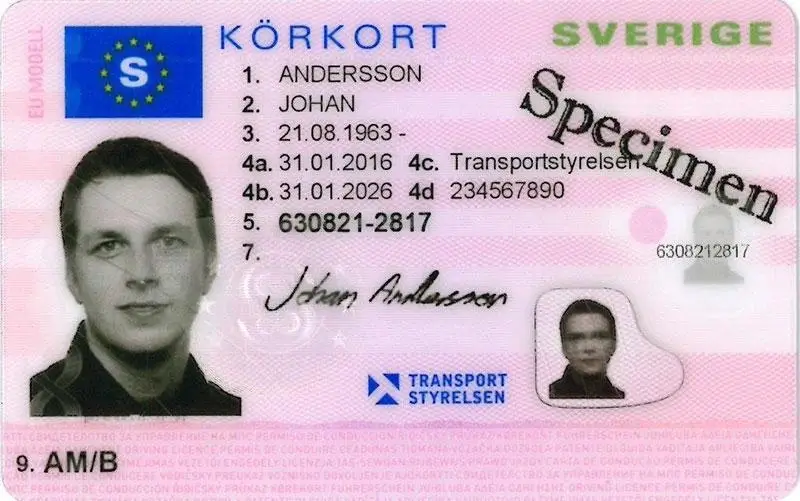
How it works: The scope of the B licence is determined not by a vehicle's appearance or dimensions, but by the technical data in the vehicle registration certificate (registreringsbevis). The three critical values listed in that document are:
Totalvikt (maximum laden weight): The maximum permitted total weight of the vehicle including its own empty weight, passengers, cargo, and fuel. This value must not exceed 3500 kg.
Tjänstevikt (kerb weight): The weight of the vehicle when fully equipped and with a full fuel tank, but without passengers or cargo. Used to calculate the trailer weight you are permitted to tow.
Sittplatser (seating positions): A maximum of 9 persons including the driver. Vehicles with more than 8 passenger seats (i.e. more than 9 persons including the driver) require a D1 or D licence.
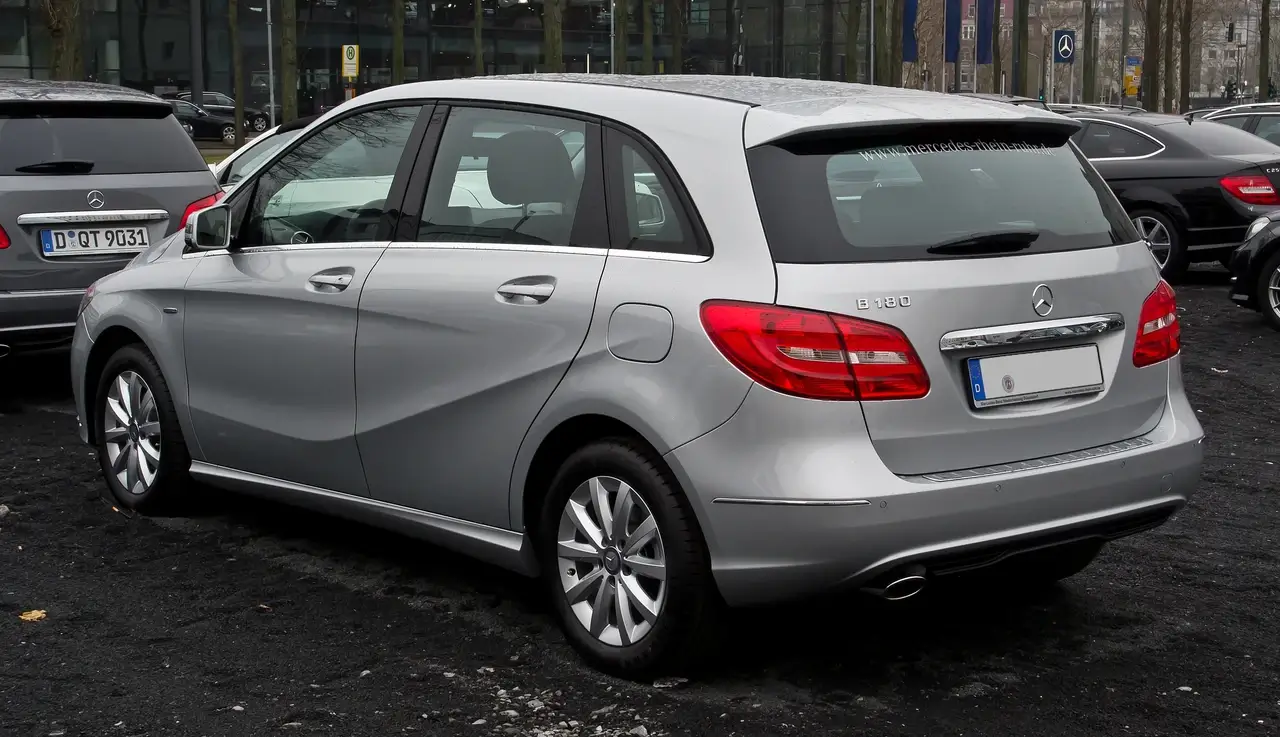
Which vehicles fall under Class B: The types of vehicles you can drive in everyday life with a B licence are:
Passenger car (personbil): Saloons, estates, SUVs, crossovers — all private vehicles under 3500 kg.
Light van (lätt lastbil): Small and medium-sized commercial vehicles, such as a Ford Transit Custom or Volkswagen Transporter — covered by Class B if the totalvikt in the registration certificate is 3500 kg or below.
Small minibus: Vehicles with a capacity of no more than 9 persons including the driver (8 passengers excluding the driver). Larger vehicles require a Class D licence.
Motorhome (husbil): Covered by Class B provided the totalvikt in the registration certificate does not exceed 3500 kg. Many larger motorhomes can exceed this limit — always check before purchasing.
Electric vehicles: Due to large battery packs, some electric vehicles have a kerb weight exceeding 2000 kg. They may still be driven on a B licence as long as the total weight remains below 3500 kg.
Towing a trailer (with a standard B licence): You may tow light trailers of 750 kg or less without any special requirements. For trailers above 750 kg, the combined weight of the combination (vehicle + trailer) must not exceed 3500 kg.
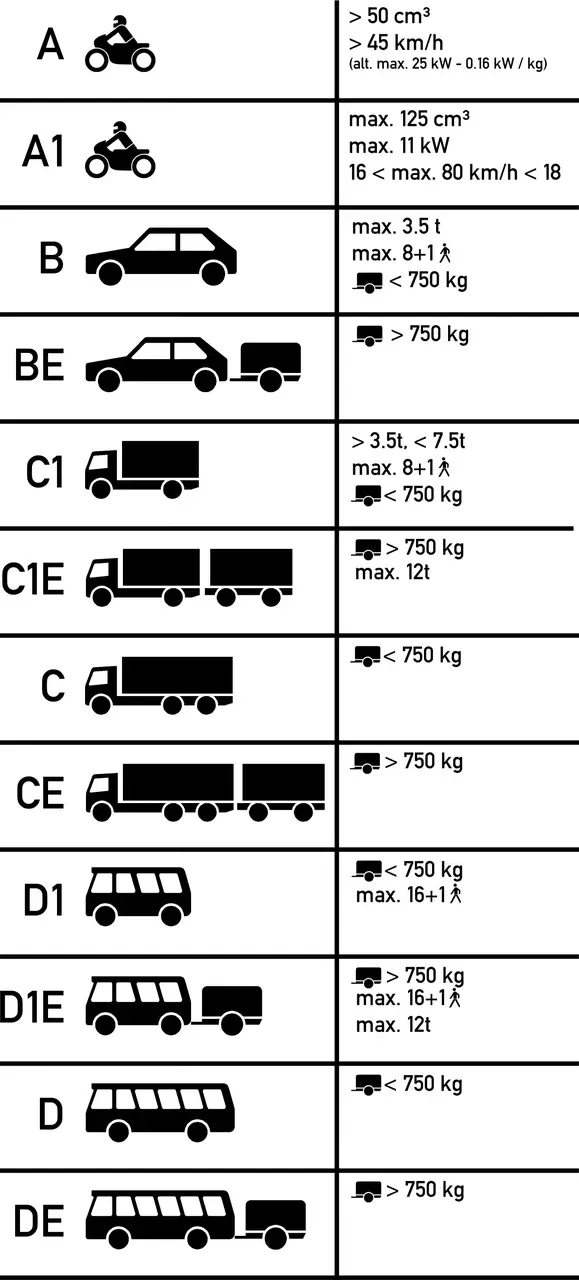
Trailer categories — the difference between B, B96, and BE: Towing a heavy trailer requires additional authorisation beyond the standard B licence. The three levels are as follows:
Standard B: If the trailer's gross weight (totalvikt) exceeds 750 kg, the combined gross weights of the car and the trailer, as stated in the registration documents, may be at most 3500 kg — the registered gross weight counts, not how heavily the trailer happens to be loaded. A light trailer (up to 750 kg) may be towed by a car with a gross weight of up to 3500 kg.
B96: Obtained by passing a driving test (körprov) at Trafikverket — no mandatory course or theory test is required. It raises the total combination weight to 4250 kg. Ideal for those who want to tow a medium-sized caravan.
BE: A full trailer licence requiring a separate examination. With this category the combination may exceed 4250 kg and heavier cargo trailers may be used.
Things to watch out for: The most common problems encountered in practice are
Weight limit misconception: Some vehicles that look small (high specification, 4×4 drivetrain, or large battery) may be registered above 3500 kg in the certificate. Do not rely on appearance — check the registration document.
Trailer calculation error: For trailers over 750 kg, the calculation uses the totalvikt values in the registration certificates: the car's totalvikt plus the trailer's totalvikt may be at most 3500 kg on a B licence, or at most 4250 kg with B96. How heavily the car is actually loaded at the moment does not change this calculation. Also check the maximum trailer weight stated in the car's registration certificate.
Motorhome surprise: Adding seats or accessories to a purchased motorhome can push the totalvikt above the limit. Such a vehicle would then require a C1 licence.
9+ passenger misconception: Vehicles that look like minibuses but have 10 or more seats require a D1 or D licence. The seat count is independent of the exterior design.
Common mistakes: The points where candidates most often slip up in the exam are
Looking only at the empty weight (tjänstevikt) and ignoring the permitted total weight (totalvikt).
Failing to calculate how the combination weight changes when a trailer is attached.
Assuming that B96 authorisation is automatically granted together with the B licence — it requires a separate driving test (körprov).
Tips: Memorise the following points to succeed in both the exam and real-world driving:
The "Totalvikt" value in the registration certificate is the 3500 kg threshold — this is always the primary determining factor.
Before towing a trailer over 750 kg, calculate the combination weight: add together the car's and the trailer's totalvikt from the registration certificates and make sure the sum stays within the limit for your licence.
In electric vehicles the battery weight can be higher than expected — check the specifications.
Towing a heavy trailer without B96 or BE is both illegal and dangerous — keep your authorisation up to date.