Definition: The steering system (styrningssystem) is the mechanism through which the driver controls the vehicle's direction. In modern vehicles, power-assisted steering (servostyrning) is standard; this system makes it possible to make large directional changes with minimal effort.
Types of steering systems
Mechanical steering: The steering column is connected to the front wheels via a gear mechanism. In purely mechanical systems, the driver applies all the force themselves — rare in modern vehicles.
Hydraulic power steering (hydraulisk servo): A pump driven by the engine provides hydraulic assistance to the steering box when turning. When the engine is off, the assistance is cut and the steering becomes heavy.
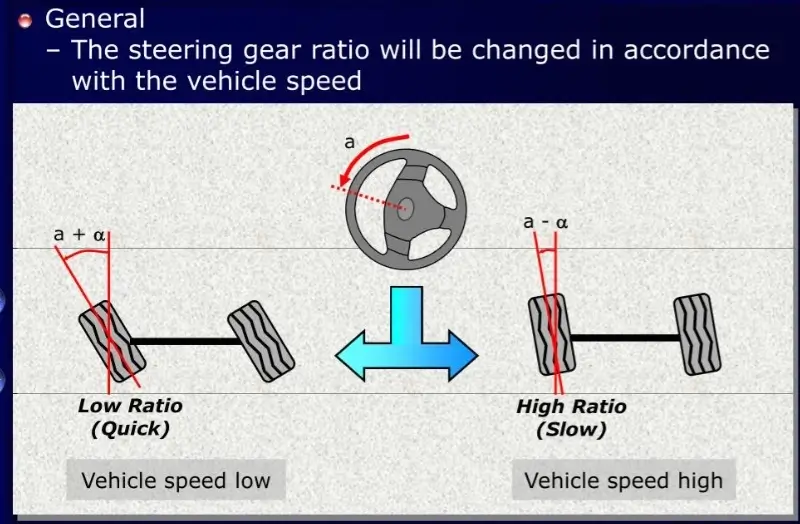
Electric power steering (EPS — elektrisk servo): The most common system today. An electric motor provides assistance to the steering column or rack. It is not dependent on the engine and is more efficient. In some vehicles, the level of assistance varies with speed — easy at low speeds, providing a more precise feel at high speeds.
Four-wheel steering (fyrhjulsstyrning): The rear wheels also change direction. This improves manoeuvrability at low speeds and enhances stability at high speeds.

Steering technique
Hands at the 9-3 position (clock face): The most commonly recommended grip. Minimises the risk of the hand striking the face when the airbag deploys. Holding the arms in the upper position (10-2) can cause the airbag to fling the arms.
No cross-arm technique: The steering wheel must not be turned by passing an arm through it — this increases the risk of losing control.
Consistent pressure: Maintaining equal pressure with both hands keeps the vehicle travelling straight; a one-handed grip weakens control.
Signs of steering faults
Vibration: Steering vibration at high speeds may indicate wheel imbalance, or worn suspension bushings or tie rod ends.
Pulling: If the vehicle pulls to the right or left when you release your hands, the wheel alignment or tyre pressure should be checked.
Heavy steering: Power assistance failure. In hydraulic systems, this points to a problem with the pump or fluid; in electric systems, to the motor or sensors.
Harsh impact through the wheel (bump): Feeling a sharp jolt through the steering wheel may indicate a problem with a tie rod end, ball joint, or bushing.
The relationship between road holding and steering
The steering system does not only transmit the driver's input; it also feeds back the vehicle's road holding to the steering. This "feedback" is critical for understanding what the vehicle is doing, especially on slippery roads. Overly powerful servo assistance reduces this feedback.
Common mistakes
Passing an arm through the steering wheel: This obstructs emergency manoeuvres and carries a risk of accident.
Ignoring steering vibration: A small vibration can develop into a major fault over time.
Stressing the servo while parking: Turning the steering to full lock and holding it there puts strain on the hydraulic pump.
Tips
Make the 9-3 hand position a habit — it is safe, especially in modern vehicles equipped with airbags.
If the vehicle pulls to the right or left, check the tyre pressure first — it is often a simple fix.